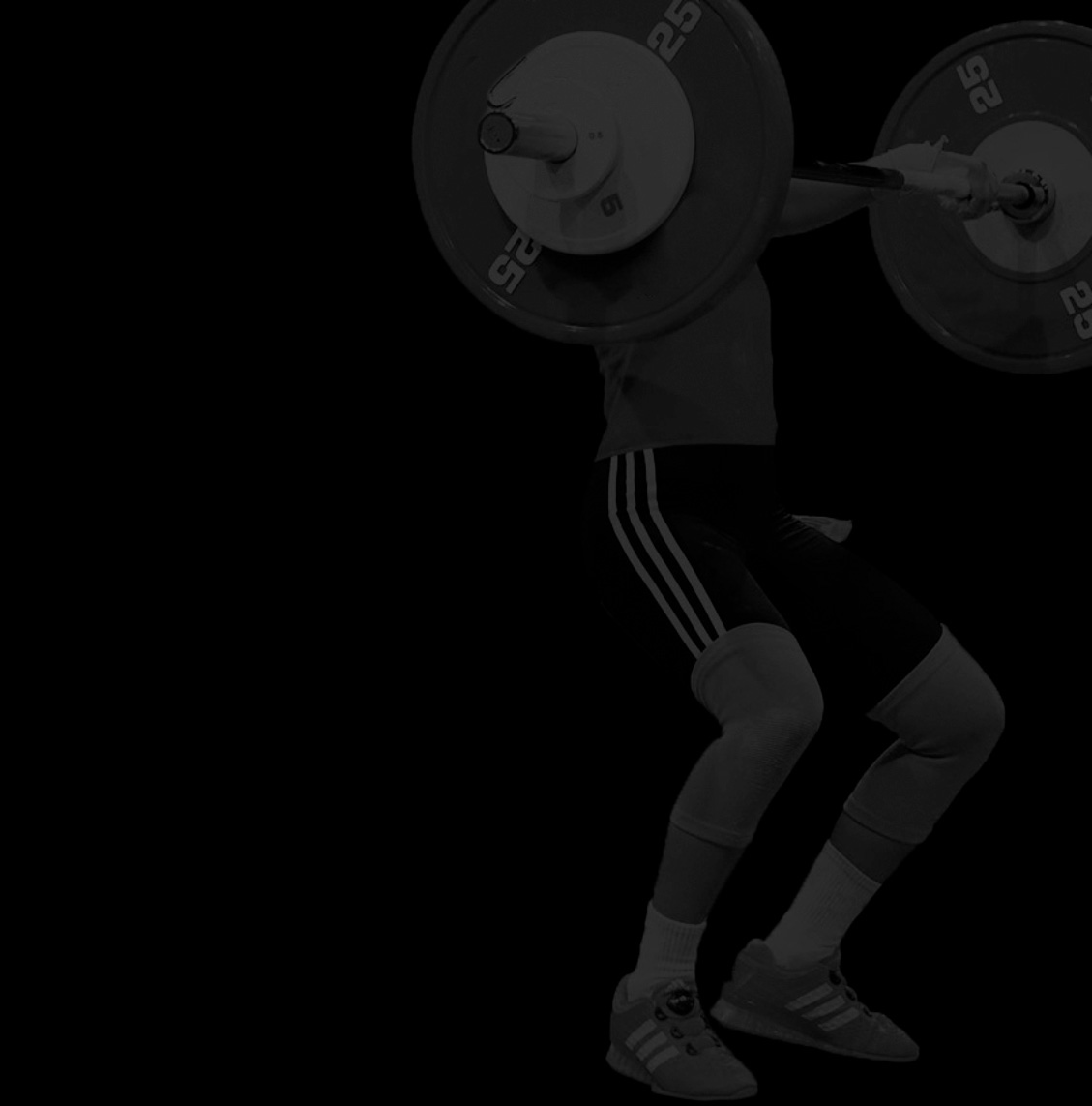
Jong Sim RIM (PRK) W75kg
There was no stress. I just tried really hard. I was really overwhelmed with happiness that I won this gold medal so I can send this honour to my
News and Media
Jong Sim RIM (PRK) W75kg
There was no stress. I just tried really hard. I was really overwhelmed with happiness that I won this gold medal so I can send this honour to my
Kianoush ROSTAMI (IRI) M85kg
I wasn't thinking I was going to win. Sometimes the weights change and sometimes the bodies change. If I have more time in the future I will set more Olympic records and more world
World record for Rostami, and Valentin’s bronze ‘feels like gold’
By Brian Oliver at Riocentro, Rio de Janeiro Kianoush Rostami broke his own world record, Iran and PRK won their first gold medals of the Games, a Romanian had a six-out-of-six bronze, and Lidia Valentin finally got her chance to stand on the Olympic podium on an exciting day of action at Riocentro. Rostami won the 85kg when he lifted 217kg with his final clean & jerk for a total of 396kg, better than his record by 1kg. He predicted more gold for Iran, who have favourites in the 94kg and +105kg in Sohrab Moradi and Behdad Salimikordabiasi. “We will see more gold medals, and more world records for Iran,” he said. “Now that I have won I’m sure to others will win too.” In her third Olympics Valentin finished third in the women’s 75kg behind Rim Jong Sim of PRK and Darya Naumava of Belarus. Naumava, 20, was winning her nation’s first medal of the Games in any sport, only five years after giving up the shot put to become a weightlifter. The popular Valentin, 31, is the 2012 champion by default but was not on the podium in London as she finished fourth. The three who finished ahead of her recently tested positive in reanalysis of samples. “It may be a bronze medal but it feels like gold,” said Valentin. “I’m really really excited that I could stand on the podium after so many years. I am going out tonight to celebrate with my parents, who are here, and my coach. “I will keep competing too, and hopefully I will be in Tokyo in four years. That’s my long-term target, but next for me is the 2017 European Championships. I’m only 31 and I feel good. My experience gives me a good foundation, and my motivation is still strong. I’m doing fine.” Rim won by 16kg with a total of 274kg. She was cheered not just by a large group of North Korean athletes wearing national team tracksuits, but by a number of Brazilians who mingled with the North Koreans to sing, dance and wave a borrowed flag. Weightlifting is by far the strongest Olympic sport for North Korea and the team expected to have at least one gold before Rim’s victory. Instead they suffered a string of defeats. “I was very sad that my comrades did not win a gold medal,” said Rim, 23. Did those failures put Rim under pressure, she was asked. “No, I did not feel any pressure, I just focused on each lift,” she said. “The first thing I thought when I knew I had won was that I had made our Beloved Leader (Kim Jong Un) happy. “Training was very hard and sometimes I was crying when I finished. But I knew that whenever that happened I was a step closer to the gold medal.” Silver medallist Naumava said she took up weightlifting fairly late after she struggled with an increase in weight of the shot put as she grew older. “I just fell in love with it straight away,” she said. Rim suffered a bad hip injury at the IWF World Championships in Houston, Texas last November. She continued to lift against doctors’ advice, finished second and had to be lifted on to the podium. “I could train again after about two months,” she said. “We have very good medical and rehabilitation facilities in our country.” Rostami’s gold was Iran's first medal of the Games in any sport. Tian Tao of China took silver despite making only two of his six lifts, and Romania's Gabriel Sincraian, with six out of six, took bronze, edging out Kazakhstan’s Denis Ulanov. “Six out of six!” said Sincraian. “It must be the first time I’ve done that for about 10 years. I’m very happy with that.” Rostami looked supremely confident throughout. When he made his first two snatches with apparent ease he bowed and gestured to the crowd as if to say “How good was that?” He missed his third attempt, though, and finished the snatch only 1kg ahead of his main rival Tian. Tian, 22, came desperately close to being eliminated. While Rostami cruised through those first two lifts Tian failed at 173kg, went up by 5kg for his next attempt and missed that too. On his third snatch, also at 178kg, he looked beaten. He wobbled on his right knee, then his left, but found the strength to make the lift. The crowd loved it and roared their approval. A group of Iranians took the noise to another level when they performed the ‘Iceland haka’ that made such an impression at the recent Euro 2016 football. Tian missed his first two clean and jerks too, which brought back memories of the IWF World Championships in Houston, Texas last November. He missed all three attempts then, and having led after the snatch he failed to register a total. “I was too confident and didn’t keep calm in the World Championships,” he said. “Tonight I was over-excited in the first two lifts but I always thought I would make the third one. “I offer my congratulations to the winner and hope we have many more chances to compete against each other. I am confident I can beat him.” Rostami said, “He (Tian) is very good, he’s younger than me. We can have some good contests.” Rostami coaches himself, a point he made several times to the media afterwards. “The Iranian coaches are good but I want to make my own decisions,” he said. “Nobody thought it was possible to come to Rio without a coach but here I am. “All the time I train alone, just me in a training camp. Nobody sees me. It can make your mind go a bit crazy. But I will be here again the next time (in Tokyo) for sure.” Of the two French lifters the one from the B Group, Giovanni Bardis, finished 7kg clear of teammate Benjamin Hennequin, who lifted in the A
Records tumble but Egypt take the honours after long wait
By Brian Oliver at Riocentro, Rio de Janeiro Kazakhstan had one gold, one silver and one world record. China had one gold, one silver and one world record. But the stars of day five of weightlifting at Riocentro were the nation who finished third in both events, Egypt. For the first time since the 1948 Games in London an Egyptian man won a weightlifting medal – Mohamed Ihab in the 77kg. A few hours earlier Sara Ahmed, aged 18, had become the first Egyptian woman in any sport to stand on the Olympic podium after taking 69kg bronze. They both agreed that for Egypt, the future is very bright. “By the time of Tokyo 2020 Egypt’s status in world weightlifting will be completely different,” said Ihab, 24. The world records came in the men’s 77kg. Lyu Xiaojun, wearing gold shoes provided by his confident sponsors, broke his own snatch world record with a lift of 177kg. After his third clean & jerk he stripped off his top and screamed in triumph. But Lyu reckoned without Nihat Rahimov. With two lifts left Rahimov, who was born in Azerbaijan and lifted for them until 2013, had to make up 12kg to match Lyu’s total of 369kg and win on bodyweight. Unbelievably, he did it at the first attempt, beating the clean & jerk world record by 4kg. It finished Kazakhstan gold, China silver, the opposite of the women’s 69kg in which Xiang Wanmei beat Zhazira Zhapparkul. But the bronze medallist was the star of that show. Sara Ahmed, from Ismailia, was not only the first Egyptian woman to stand on the Olympic podium, she was the first Arab woman to be presented with a medal in weightlifting. “This is such a big honour,” said Ahmed, who won the Youth Olympic Games title two years ago. “All Egypt was waiting for one or two medals from our team.” Technically, Abeer Abdelrahman preceded Ahmed. At London 2012 Abdelrahman finished fifth in the women’s 75kg but because of two doping cases ahead of her, revealed by recent retesting, she becomes a silver medallist. “But I was the first to be on the podium,” said Ahmed, who took up weightlifting because her brother competed in it. She went to cheer him on and later trained and competed herself. Her father died in a motor accident last year and Ahmed, who has two brothers and two sisters, said she would use her reward from the state (500,000 Egyptian pounds, worth $56,000) to help her family. “My father was an agricultural engineer and he was the only breadwinner in the family,” she said. “Now it can be me. I intend to win more medals.” Before the International Weightlifting Federation changed the rules in 2011 to allow muslim women to wear a full-length unitard, very few females practised the sport in the Arab world as they considered the clothing immodest. Ahmed, who wore a full-length unitard and a sports hijab, said, “I have worn the hijab only for a year. It is not compulsory, but I like it. “I hope this medal will encourage other girls to take up the sport. A new weightlifting generation can be born, a new beginning.” Weightlifting and handball were the most popular sports for Egyptian girls, she said. “I hope I can help to reestablish Egypt as a successful weightlifting nation.” Ahmed made six good lifts and had an anxious wait when Colombia’s Leidy Solis Arboleda made her last clean & jerk attempt at 146kg. Had she made it she would have edged Ahmed out of the medals, but she failed and Egypt’s coaches celebrated loudly. Xiang won with a lift to spare, totalling 261kg. Zhapparkul made 259kg. Xiang thanked her parents for helping her through her career “My parents raised four daughters and it was very difficult for them, especially my father,” she said. Zhapparkul won the contest for most sisters. She is the youngest of seven girls. There was an interesting contrast in speed of lifting during the two sessions. Darya Pachabut, of Belarus, took so long she was timed out on her first snatch attempt. Earlier, in the B Group, Britain’s Rebekah Tiler had 52 seconds on the clock when she made one of her clean & jerks. “I like to get on with it,” said Tiler, 17, who finished 10th and is already looking forward to Tokyo. Egyptian men had won nine weightlifting medals, including five golds, when Ahmed won her bronze. A few hours later the 68-year wait for a tenth male medal was over. Ihab Mohamed totalled 361kg for third place, 18kg behind Rahimov and Lu. He said, “There are Egyptian athletes waiting to be promoted into medal positions because of the doping [at 2008 and 2012]. I hope this was a 100% clean competition.” Ihab, from Al-Fayoum, is one of six brothers, all weightlifters. He is the only one competing at this level and he is assured of a hero’s welcome after the Games, he said. Kazakhstan won their first gold of the 2016 Games through Rahimov, who served a two-year doping ban after testing positive at the 2013 Universiade. At the time he competed for his native Azerbaijan. When Rahimov made the lift the Kazakhstan national coach, Aleksey Ni, ran on to the platform to hoist his hero off the ground. Ni then fell on to his back and kicked at the air. On the basis of that record Rahimov was asked, “What would you say to Olympic fans who doubt the validity of your medal?” His reply was, “I am not aware of the problem so that is what I would tell them.” Lyu, who had broken his own snatch world record with a lift of 177kg, said of Rahimov, “I met a stronger competitor. I admire him.” Lyu’s sponsors gave him a pair of specially made gold shoes in the expectation that he would retain his Olympic title. After he made his sixth and final lift he clearly thought he had done enough to win. But Rahimov had the final
Two golds for China, two world records for Deng
By Brian Oliver at Riocentro, Rio de Janeiro China’s Deng Wei broke two world records in five lifts on her way to recording the easiest win to date at the Rio Olympic Games in the women’s 63kg. A few hours later the impressive Shi Zhiyong won the men’s 69kg to make it a double and take China to the top of the weightlifting medals table. There was also a first Olympic weightlifting medal for Kyrgyzstan, a first failure for Thailand’s women’s team, and more disappointment for PR Korea. Deng Wei won with a lift to spare. She beat her own clean & jerk world record by 1kg with 147kg on her second attempt. That took her to a total of 262kg, which was 1kg better than the world record set in 2014 by Taipei’s Lin Tzu-Chi. Deng finished 14kg clear of Choe Hyo Sim, of PRK, who has stood below her on the podium at the past two IWF World Championships. It was the widest winning margin of the seven events to date. At the age of 23 Deng has plenty more championships ahead of her. “My performances were good enough to be in the team at London four years ago but another teammate was chosen ahead of me,” she said. “This was my first Olympic Games. I was nervous in the morning but I said to my coach that I could break the world record so it was within my expectation. I will continue to work hard to win more gold medals.” The bronze medal was won by Karina Goricheva, 23, from Kazakhstan. Siripuch Gulnoi, the Thai who had been expected to challenge for a medal, failed with all three clean & jerk attempts. PRK suffered more disappointment in the men’s 69kg when Kim Myong Hyok, a close fourth in the IWF World Championships, made only one good snatch lift and failed with all three clean & jerks. The glory went to Shi Zhiyong and the Kyrgyzstan’s Izzat Artykov. Shi became an Olympic champion just the like the man whose name he was given when he was a teenager. The older Shi, 36, won at 62kg in Athens in 2004 and is now a government official. The new Shi won by 1kg from Turkey’s Daniyar Ismayilov, who made six good lifts but was still beaten. The “new” Shi was born Shi Lei. He explained, “I was still young when I left my family to train and my coach gave me the new name. At that time I did not know about the 2004 Olympics. As I grew up I learned all about Shi Zhiyong and I am proud to say we met a few years ago. “The name means wisdom and courage, and Shi told me that as I had his name I must never give up, and I should become a champion like him. “I also owe so much to my coach, another great Olympic champion.” That man is Zhan Xugang, 42, who won gold at Atlanta in 1996 and Sydney in 2000. Shi, 22, the reigning world champion, held off the challenge of Ismayilov, who had finished 13th at the London Games four years ago when competing for his native Turkmenistan. He has since switched to Turkey. Artykov, whose strength has improved enormously over the years, wore a kalpak hat, part of Kyrgyz national costume, to the post-event press conference. “Do you like it?” he said. “I am proud to wear it, and this medal is great news for everyone in Kyrgyzstan.” When Artykov first competed at a major international event as a 17-year-old in 2010, at the IWF World Championships, he was in the lightest category, 56kg, and finished 23rd with a total of 225kg. At Riocentro, competing two weight categories higher, he lifted 114kg more. Artykov’s total of 339kg was well adrift of the top two. Shi totalled 352kg despite missing his last clean & jerk attempt, finishing 1kg ahead of Ismayilov.
Focus on FIGUEROA MOSQUERA Oscar Albeiro
By Brian Oliver at Rioceentro, Rio de Janeiro Even Chinese journalists and American spectators shed a tear when Oscar Figueroa, a 33-year-old Colombian who practises meditation, broke down on the stage after winning the 62kg gold medal at Riocentro. He did not stop crying for five minutes. Hundreds of noisy Colombians cheered, cried, and sang their anthem with gusto as Figueroa, a silver medallist at London 2012, triumphed in his fourth and probably last Olympic appearance. On a night of high emotion he was roared on by those fans who cheered his every attempt, as well as the failures of his main rivals. There was an especially loud cheer when the favourite, China’s Chen Lijun, withdrew injured after two failed lifts in the snatch, suffering from leg cramps. Figueroa’s meditation clearly helped because while his supporters were in a frenzy and his rivals’ challenges fell away, he remained a picture of calmness. “There’s a lot of pressure because the Colombian public have very high expectations of their weightlifters and they expect great results,” he said. “So I meditate a lot and I like to be in regular contact with nature.” Weightlifting provided Colombia with its first Olympic gold medal in any sport when Maria Urrutia won in Sydney 16 years ago. Figueroa eventually went head to head with Indonesia’s Eko Yuli Irawan, who had finished one place behind him in London. When Irawan failed with his final attempt in the clean & jerk Figueroa had won. Irawan finished second and won a medal for the third Olympics in a row, having taken bronze in London and Beijing. The cool Colombian returned to make one last, unsuccessful attempt to break his own clean & jerk Olympic record. Then the calmness disappeared. Figueroa fell to his knees in tears. He stayed there for a minute or so, then removed his shoes and placed them on the stage as a sign that he would now retire. Figueroa seemed to have second thoughts as he picked up his shoes, and he kept crying as he fell into the arms of his coaches at the side of the stage and back in the warm-down area. He confirmed as much afterwards when he said, “its 22 years since I started and now is the time to retire, which is why I removed my shoes. But I am full of emotion – it’s as though I was lifting for the whole country, and those tears were for all of Colombia. So maybe I will think again about participating in Tokyo in 2020.” Figueroa, who has two daughters, thanked his family, his coaches and his doctors. He will finish his business studies and wants to open a sports institute in his name in Cali. “I urge the President to complete the Sports Act and to guarantee a solid base for all athletes, and to build a training center, the Oscar Figueroa Centre, in Cali,” he said. His mother – “my biggest supporter” – was there to watch him triumph. Figueroa said he had experienced “two extremes in my life” at the Olympics. Having finished fifth at the 2004 Games he looked forward to Beijing in 2008 in good form. Two weeks before those Games he suffered a hand injury and he failed with all three snatch attempts. “I was so low in Beijing, and I am so high here,” he said. He underwent back surgery seven months ago to improve his mobility and recovered well. In June he was in court, convicted of false representation in a dispute with a former friend over a loan to buy a vehicle. He was sentenced to 16 months in prison but it was immediately commuted and he eventually paid a small fine. “That case was not a distraction for me,” he said. “I am not interested in bad news, I am here to celebrate. My tears were tears of