





Glasgow, Day 5: Emily Campbell stars on a big day for England – and two more golds for Oceania
Emily Campbell put on a show for a noisy full house on the final day of weightlifting at the Glasgow Commonwealth Games. “They made so much noise I couldn’t hear myself think!” said Campbell after winning her second women’s super-heavyweight gold by a wide margin.
Her team-mate Cyrille Tchatchet II won silver at 110kg to round off a remarkable personal journey in the 12 years since Glasgow last hosted the Games, and there was a third medal for England when Andy Griffiths took a surprise bronze in the super-heavyweights, which David Liti won in dramatic style for New Zealand.
Fiji were the other winners on the final day, taking Oceania’s haul to four golds during the week. Malaysia won five and India one for Asia, Nigeria took three, Canada two and Campbell’s win meant that for the second Games in succession all five of weightlifting’s continental federations won at least once.
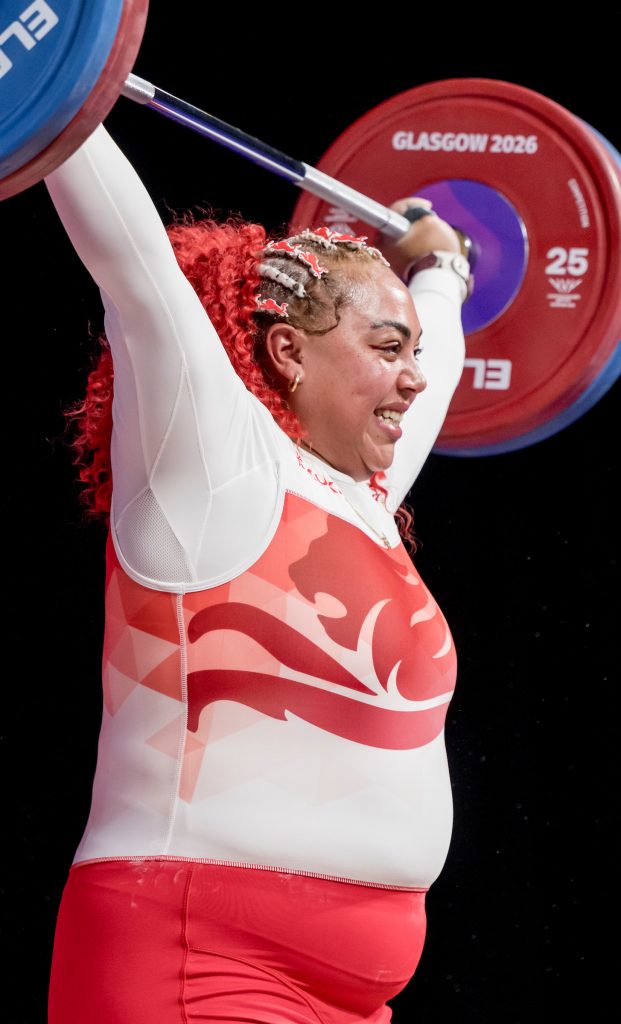
Emily Campbell (ENG)
Campbell pulled clear in clean and jerk after three athletes finished within 2kg of each other in snatch.
When she won in Birmingham four years ago, she totalled 286kg and finished 18kg clear of Iuniarra Sipaia from Samoa. This time 254kg would have been enough for victory but Campbell went for more.
Everybody else had finished before Campbell, 32, came out to make her first clean and jerk on 148kg. That secured gold and left her 10kg clear of 20-year-old Aqilah Farhana from Malaysia, with 18-year-old Etta Love from Canada third. But Campbell did not know she had won.
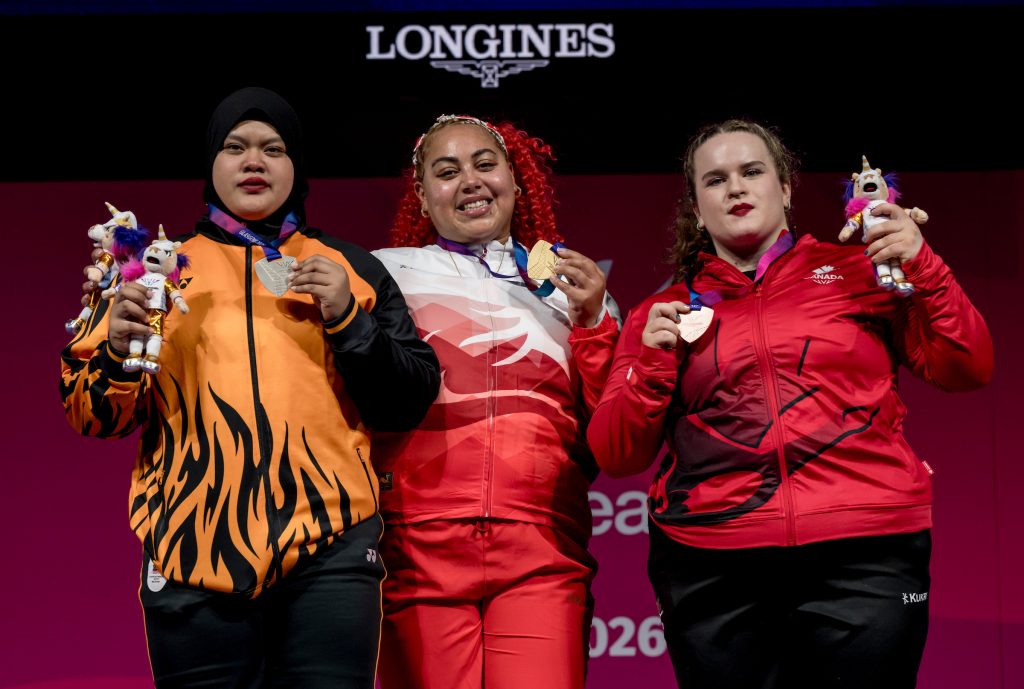 Women’s +86kg podium
She returned for 155kg and 163kg to earn the biggest cheers of the week, finishing 115-163-278 – more than she made at the European and World Championships in her past two appearances.
“The coaches decide everything and my job is to just go out and lift the bar,” she said. “When I made my first (clean and jerk) I didn’t know I’d won.
“After the second I had a good idea that I’d done it. Then my coach asked if I wanted to go out for another one and I said yes. I’ve looked back at the replay and it was just about perfect, so I’m glad I did.”
The winning margin was 25kg. Aqilah made 113-140-253 and Love, the 2024 world youth champion, 106-144-250.
Sipaia struggled to 100kg in snatch and bombed out in clean and jerk. On a bad day for Samoa, two other medal contenders also bombed out – Jack Opeloge at 110kg and favourite Sanele Mao in the super-heavyweights.
Campbell said: “I’m going to watch the big boys (men’s super-heavyweights) then we’re out in Glasgow tonight. I’m going to enjoy what’s happened, have some good food and maybe a few drinks.”
Aqilah and Love enjoyed the experience too. “I’ve followed Emily Campbell for years and she’s so inspiring,” Love said. “To be on the platform with her was quite an experience.”
Tchatchet put up a career-best performance at 110kg, a six-from-six 166-208-374, and celebrated on the platform with his mother after the medal ceremony.
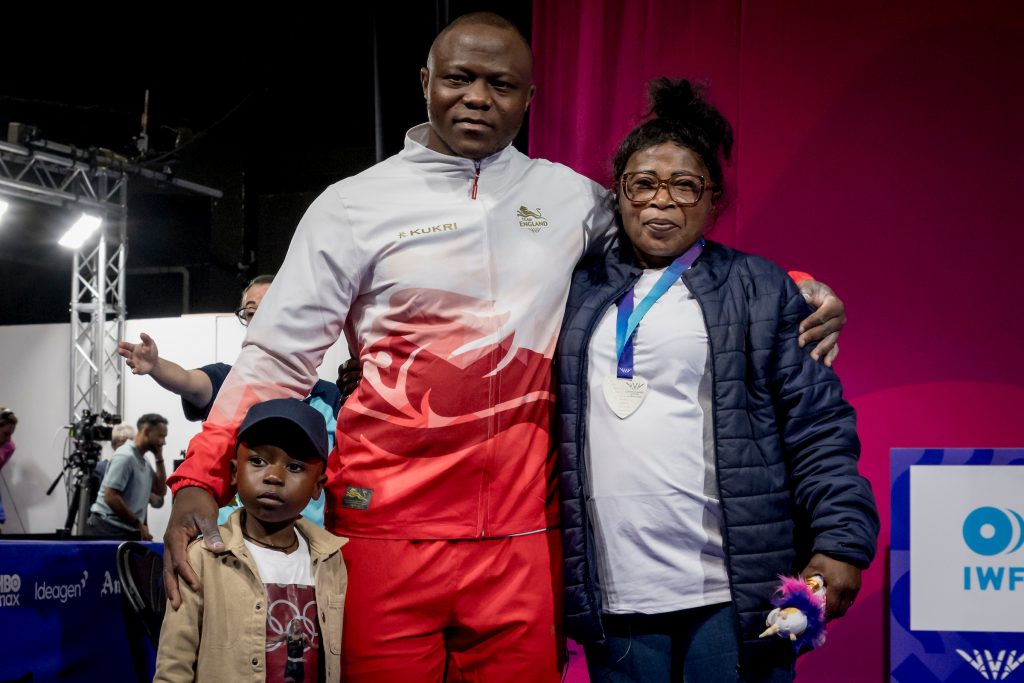 Cyrille Tchatchet (ENG) and his family after earning silver in the men’s 110kg
“It’s the first time she has ever seen me compete and for it to be here was very special,” said Tchatchet. “I have been desperate to win a Commonwealth Games medal and now I have one around my neck I don’t know how to describe it in words.
“I’ve been on quite a journey, with lots of bombs along the way.”
Tchatchet lifted for Cameroon back in 2014, finishing fifth at 85kg. He said it was unsafe to return because his life had turned “toxic” and stayed in Britain, sleeping rough. He ran out of money in Brighton on the South Coast, fell into depression and contemplated suicide.
As a last resort he called the Samaritans, an emotional support charity, and was taken into police custody at the start of an asylum process that lasted several years. Tchatchet worked, studied, got a job as a mental health nurse in the NHS, started a family (he has two daughters), bought a house, returned to weightlifting and lifted at the Tokyo Olympic Games as a member of the IOC refugee Team.
He recently qualified as a cognitive behaviour therapist and will practise in that field for a few years. “I’m back at work on Monday,” he said. Tchatchet will be back in the gym too, preparing for the World Championships in China starting in October.
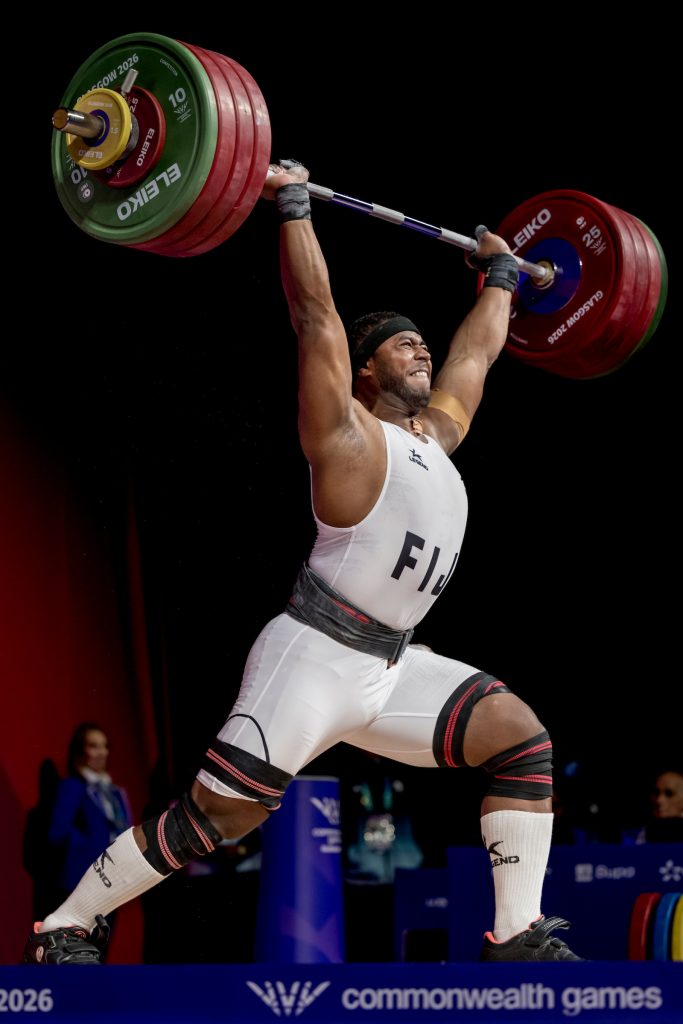
Taniela Rainibogi (FIJ)
Taniela Rainibogi won on 170-208-378, becoming Fiji’s first gold medallist since Eileen Cikamatana in 2018.
In Birmingham four years ago, Rainibogi was beaten by Don Opeloge from Samoa. This time Don’s brother Jack, who pipped Rainibogi for the Oceania title in April, was expected to be the main challenger but he bombed out in clean and jerk.
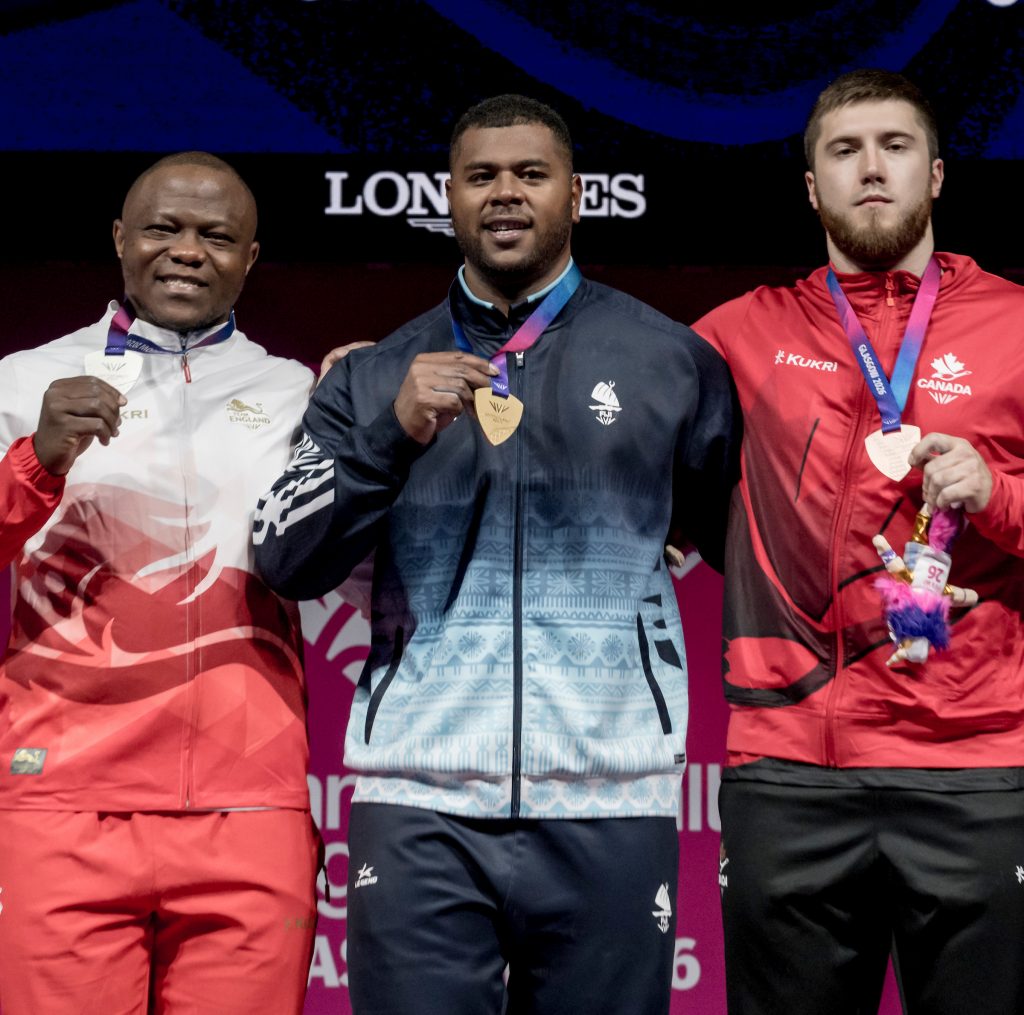 Men’s 110kg podium
Xavier Lusignan from Canada made two good lifts for 159-197-356, which was enough for third place. The Californian Josh Uikilifi, who competes for Tonga, was fourth on 146-185-331.
Commonwealth champion Mao was out of the super-heavyweights when he failed three times to snatch 175kg. That gave Liti a chance to win his second Commonwealth Games gold and he took it despite trailing Lovepreet Singh by 10kg in snatch.
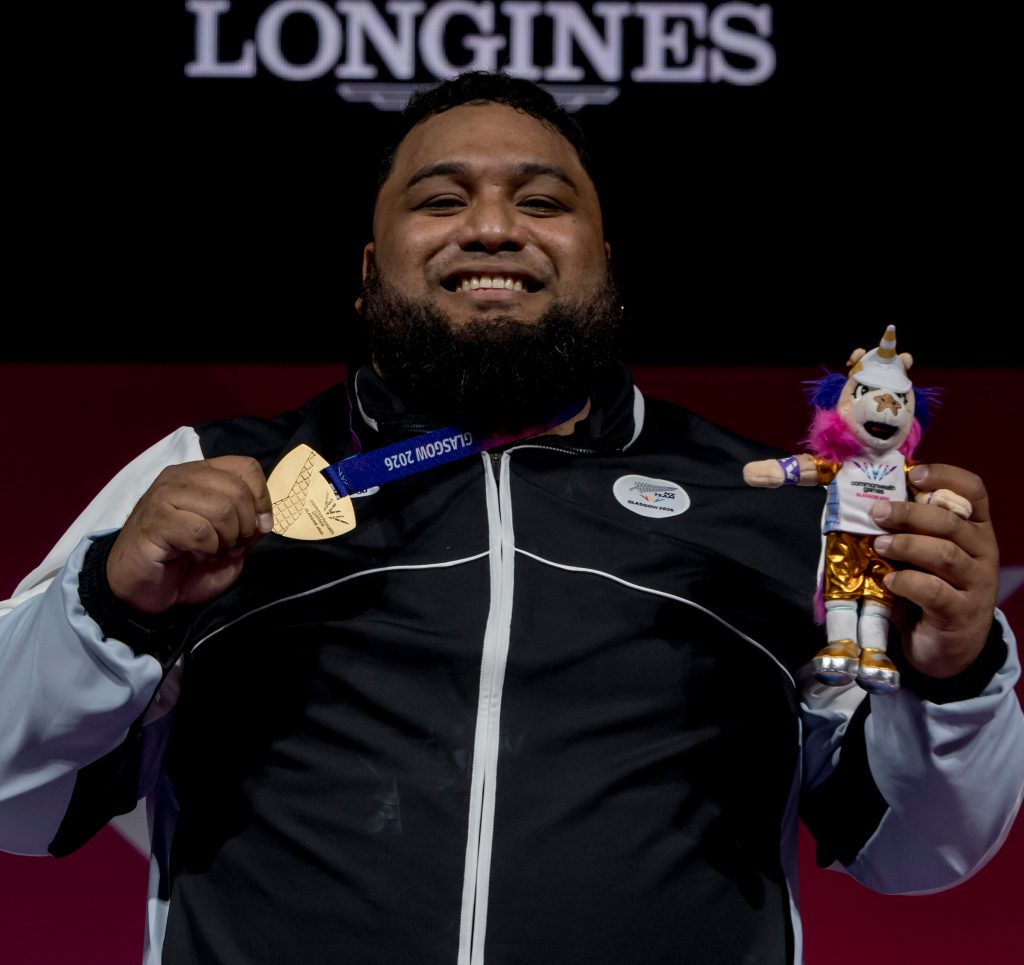 David Liti (NZL)
Liti, who had not been at his best since finishing eighth at the Paris Olympic Games, had two attempts remaining when Lovepreet, from India, finished 176-212-388. He had to jump 16kg for victory and made it impressively before bringing his coach Tina Ball on the platform to celebrate with him. He finished 166-223-389 after declining his final attempt.
Griffiths, who was sixth at 109kg in Birmingham on 346kg, moved up to the supers for the first time in international weightlifting. When Mao departed he took his chance, making 165-191-356 for bronze.
Griffiths, who runs a gym in the northwest of England, is Tchatchet’s room-mate and friend. “I moved up in weight to avoid Cyrille,” he said. “I didn’t fancy my chances of qualifying up against him. I loved it – got to eat a lot and ended up with a medal. I think I’ll be staying as a super.”
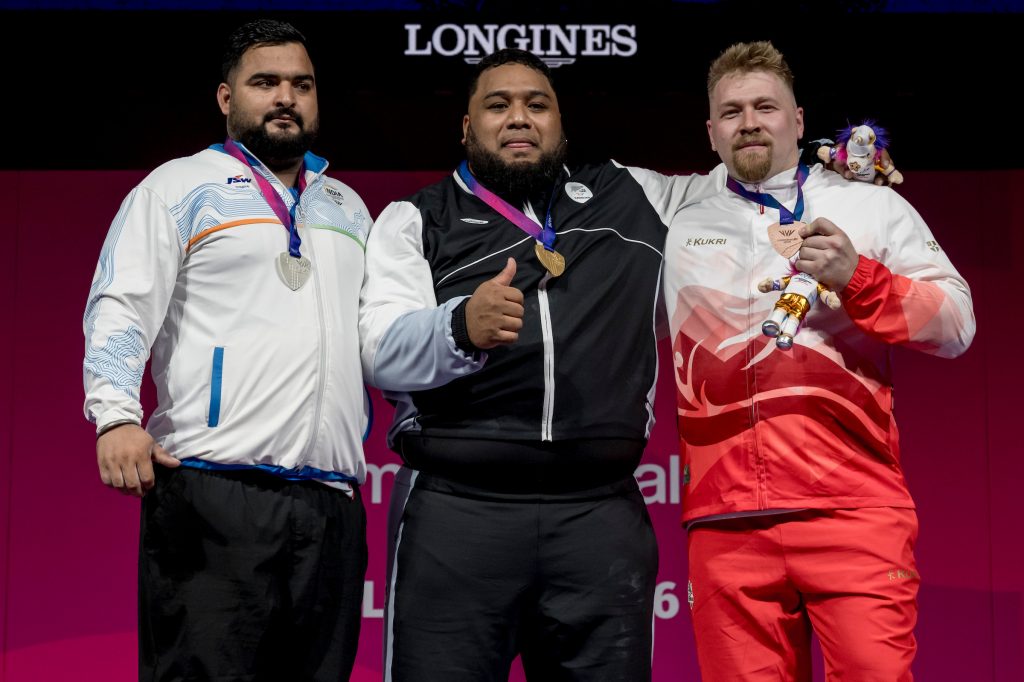 Men’s +110kg podium
Liti wanted to bring his coach into the limelight because she persuaded him into the sport when he was at high school and has been with him ever since. “Tina asked me if I wanted to be just another number in rugby or be somebody in weightlifting,” he said. “I made the right choice.”
By Brian Oliver
Photos by Giorgio Scala/Deepbluemedia