
News and Media

News

IWF120y/49 – 2000: Kakhi Kakhiashvili completes the Olympic treble

Born in July 1969 in Georgia, Kakhi Kakhiashvili’s career reflected the turbulent times of the Soviet Union’s dissolution in the first years of the 1990s. With a Georgian father and Greek mother, Kakhiashvili starts practicing weightlifting at the age of 11, much against the opinion of his parents (as he had already broken his two arms). But the young boy remains determined and results appear quickly – in 1988, he wins his first gold, at the World Junior Championships. In 1992, in Barcelona, he participates in his first Olympics (in the 90kg category), competing for the Unified Team (a sports entity created then, to assemble the ex-Soviet republics), and is trained by the legendary Vasily Alekseyev. In a time when national sensibilities were high, Alekseyev tried to promote his Russian protégé Sergei Syrtsov to the gold medal (to the detriment of the Georgian champion), but Kakhiashvili decided otherwise: in the Clean & Jerk portion of the competition, he lifts 235kg and despite the tie with Syrtsov, he gets the title as he was lighter than his Russian opponent. With a Total of 412.5kg (Snatch of 177.5), Kakhiashvili wins the first of his three Olympic titles. Until 1994, he still represents Georgia, but moves to Greece in that year, where he finds more favourable training conditions. In Atlanta 1996, under the Hellenic flag, he gets his second gold, in the 99kg category, lifting 185-235-420. Four years later, in Sydney 2000, he completes the treble, with a 185-220-405 performance in the 94kg. He had entered the very restricted club of the lifters with three Olympic gold medals, after Naim Suleymanoglu (TUR, 1988-1996) and Pyrros Dimas (GRE), who had achieved the same feat one day earlier. Throughout his amazing career, Kakhiashvili (nowadays President of the Georgian Weightlifting Federation) amassed three world titles and was crowned four times European champion. He also established seven World Records until his retirement, in 2004.


IWF120y/48 – 1996: Pablo Lara (CUB) earns his second Olympic medal

If Boxing, Wrestling, Athletics, and Judo lead the Cuban medal chart in the country’s Olympic history, Weightlifting proudly brought eight podium presences to the Caribbean island. It all started at the 1980 Moscow Games, when a joyful Daniel Nuñez became the first Cuban Olympic gold medallist in the sport, winning in the 56kg category (125-150-275). His teammate Alberto Blanco brought a second medal from the Russian capital, a bronze in the 100kg. Twelve years passed by until another successful lifter could celebrate an Olympic success: at the 1992 rendezvous in Barcelona, Pablo Lara earned silver in the 75kg, but could do better in Atlanta 1996, this time (photo) getting the gold (162.5-205-367.5) in his category. He remains up to date the only Cuban lifter with two medals at the Olympics. Beijing 2008 also brought good memories for Cuban weightlifting, after three bronze medals – Yordanis Borrero (men’s 69kg), Jadier Valladares (men’s 85kg), and Yoandry Hernandez (men’s 94kg). The last podium presence at the Games happened at the 2012 London Olympics when Ivan Cambar was third in the men’s 77kg category. At the IWF World Championships, Cuba collected 24 medals (only considering the Total results), and 84 awards if we take into account the podiums for Snatch, Clean & Jerk, and Total. Also at the IWF showcase, these achievements were almost exclusively achieved by men, with one notable exception: Ludia Montero was a silver medallist at the 2019 edition in Pattaya (THA). The Cuban capital, La Havana, hosted the 1973 World Championships, and 50 years later, the 2023 IWF Grand

IWF120y/47 – 2025: Knowing one of the basic lifts – Snatch

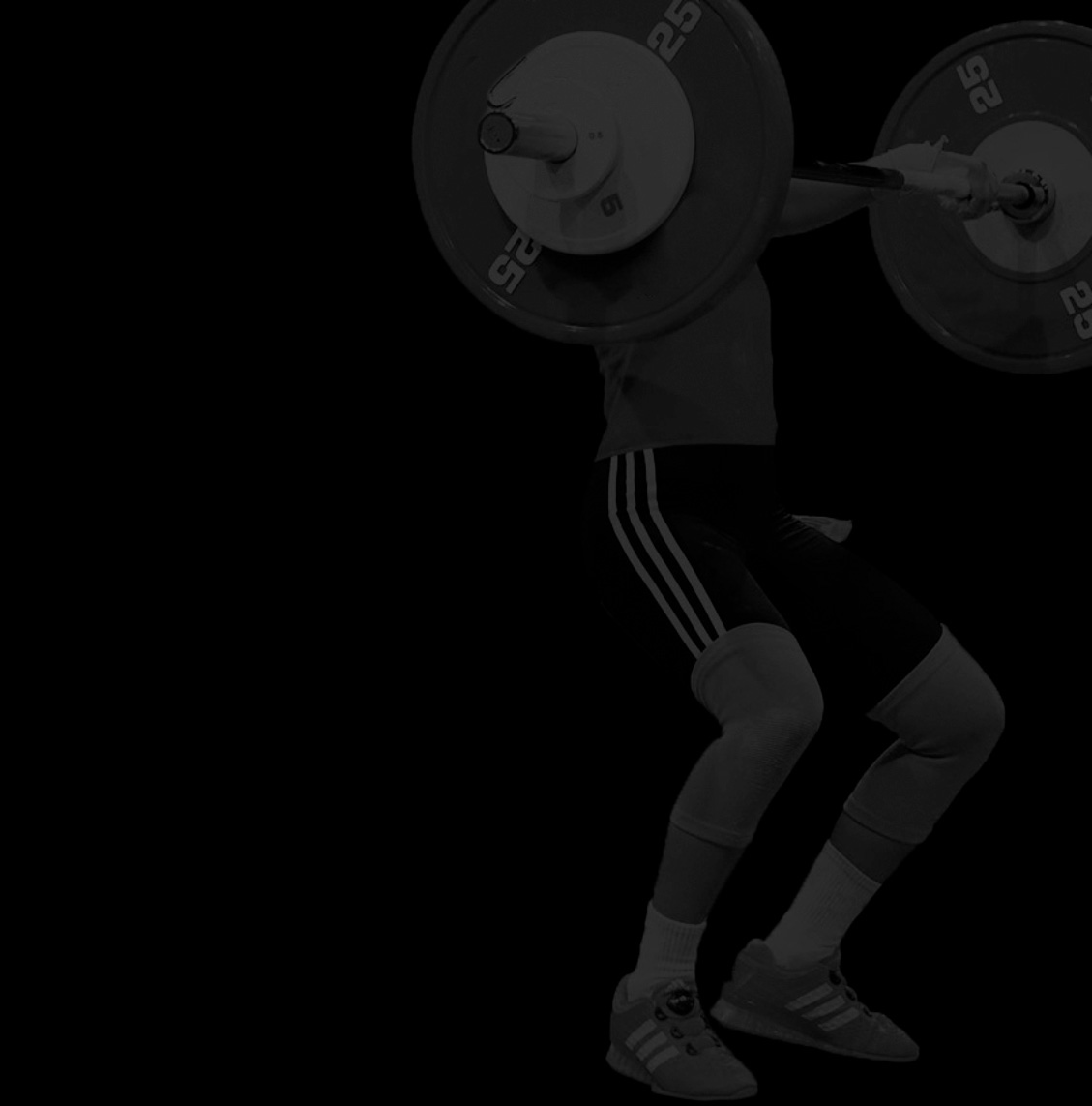
Olympic weightlifting comprises presently two basic lifts, which are performed successively: the athlete first executes up to three Snatch attempts, followed by a maximum of three Clean & Jerk lifts. The Snatch movement has been always linked with weightlifting, being historically known as the “two-hand lift”, or also the “one-motion lift”. In reality, and despite the variety of techniques used throughout the sports’ evolution, the “two-hand” and “one-motion” characteristics always remained at the core of this movement. The main difference over time relates to the way the bar is initially kept overhead – if until the first half of the 20th century, lifters opted for splitting the legs, it soon appeared that a squat position (photo) was preferable, allowing for more stability and more kilos on the bar (as it remains in a lower position when compared with a splitting-leg position). However, both techniques are still permitted today, as described in the 2025 IWF Technical Competition Rules and Regulations: “The barbell is gripped, palms downward and pulled in a single movement from the platform to the full extent of both arms above the head, while either splitting or bending the legs. During this continuous movement upward the barbell should remain close to the body and may slide along the thighs. No part of the body other than the feet may touch the platform during the execution of the Snatch. The athlete may recover in his / her own time, either from a split or a squat position. The lifted weight must be maintained in the final motionless position, with both arms and legs fully extended and feet on the same line and parallel to the plane of the trunk and the

IWF concludes successful visit to Forde (NOR)

An IWF delegation, led by IWF CEO Achilleas Tsogas, was this week in Norway to discuss the present stage of preparation for the 2025 IWF World Championships, taking place in Forde, from October 2-11. The IWF group, also including Matyas Lencser, Competition Manager, and Timea Horvath, Development and Education Manager, was welcomed by Stian Grimseth, President of the Norwegian Weightlifting Federation, and his team. From left to right: Timea Horvath (IWF), Gunnar Reiakvam (OC Forde 2025), Achilleas Tsogas (IWF), Matyas Lencser (IWF) and Stian Grimseth (OC Forde 2025) During the two-day visit to Forde, in the western part of the country, the IWF representatives could revise all the aspects related to the set-up of the IWF showcase, namely: accommodation and transportation plan, competition and training venue, sports presentation, communication and promotion, protocol and ceremonies, anti-doping procedures, and visa and financial matters. The competition venue Together with the Norwegian organisers, the IWF delegation had the opportunity to visit the proposed venues (for competition/warm-up, and training), as well as the hotels hosting the participating athletes, coaches, and officials. With a population of around 20’000, Forde is a town surrounded by water courses and mountains and is the smallest-ever host of an IWF World Championships. Coming from outside Norway, the preferred arrival airport is Bergen (the second largest city in the country), 170km away. The training facility “We had a very fruitful meeting in Forde, and we could definitively validate many of the items that had been discussed in the months before this visit. The Norwegian Weightlifting Federation and the local authorities are really determined to provide a great event in this so nice location. Considering Forde’s size, it will necessarily be a ‘compact’ championship, but everything will be done to provide an unforgettable experience to all those coming here in October,” considered Mr Tsogas at the end of the visit. “Forde already hosted the 2016 European Championships, so there is previous knowledge of the demands of such complex events. Everything we saw here is perfectly adequate to successfully welcome the world weightlifting family in six months. I extend my gratitude and appreciation to our Norwegian hosts and wish them all the best in the last stage of the preparation,” concluded the IWF CEO. IWF Communications

Lima 2025: two more days to submit Final Entries!

IWF Member Federations are kindly reminded that the deadline to submit the final entries of their athletes taking part at the IWF World Youth and Junior Championships in Lima (PER) is on this Sunday, March 30. For that, a maximum of 12 youth athletes (10+2 reserve) per gender, and a maximum of 12 junior athletes (10+2 reserve) per gender can be registered (through the following link: https://mf.iwf.sport), provided they were already included in the Preliminary Entries. All lifters not participating in the competition must be removed from the system. After this step, the Verification of Final Entries will be done on April 16 (at 12:00/Noon CET), exactly two weeks before the start of the Championships, running from April 30 – May 5, 2025 in the Peruvian capital. Also by this Sunday, March 30, and in parallel with the Final Entries procedure, participating Member Federations must transfer 100% of the total payment for accommodation and entry fees to the Organising Committee of the event. All relevant competition documents can be found

IWF120y/46 – 2016: Deng Wei (CHN) crowns a fantastic career with the Olympic gold

Born in February 1993, Deng Wei is 17 when she takes part in the first edition of the Youth Olympic Games, in 2010. The talented Chinese lifter gets the gold in Singapore, in what would be the premises of an outstanding career. Just a month later, in Antalya (TUR), she is also the best at the IWF World Championships, competing in the 58kg (102-135-237). Until the end of her career in 2021, she will collect four more world titles, becoming one of the most successful female athletes in the history of the IWF showcase. In the 63kg, she is the world champion in 2014 (110-142-252) and in 2015 (113-146-259), and is the clear favourite for an Olympic title at the 2016 Rio Games. She arrives in Brazil and confirms her credentials, climbing to the highest march of the podium, after a 115-147-262 result. The Clean & Jerk and Total performance remained the World Records in her body category (that no longer exists). From 2018, she competes in the 64kg and her domination remains intact at the international level, with two additional world titles in 2018 (112-140-252) and 2019 (116-145-261). Also in 2019, at the IWF World Cup, she establishes the WR in the Snatch, with a successful 117kg attempt (throughout her career, she improved 20 global marks). Deng trained at the Fujian Weightlifting National Sports Centre, a facility that has produced many Chinese stars since its opening in 2005. Lifters from the Fujian team earned already nine Olympic medals (including six gold), and 61 victories at the IWF
