
News and Media

News

IWF120y/16 – 1987: Karyn Marshall (USA), a pioneer in weightlifting

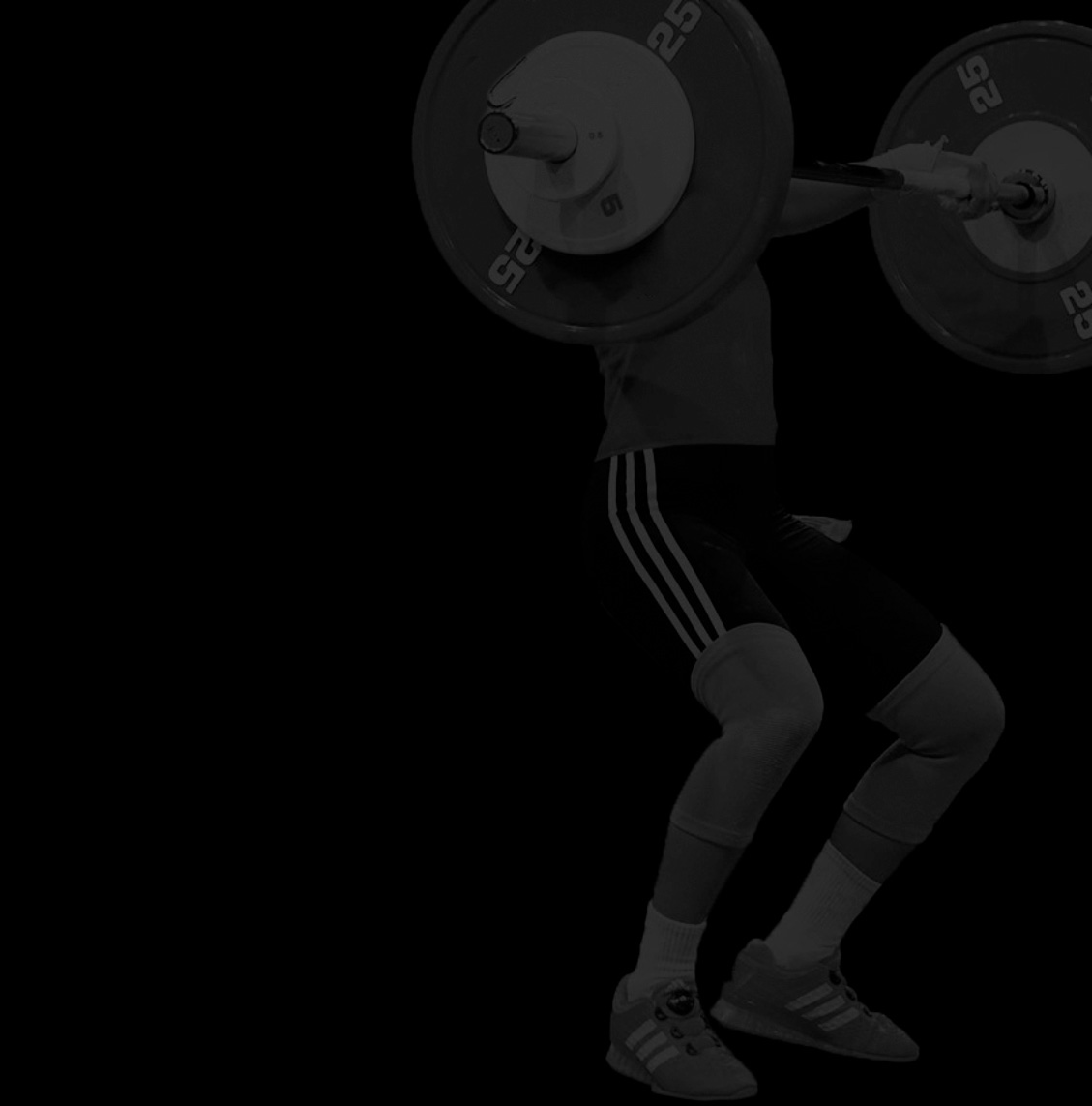
Before the IWF officially recognised and implemented women's events at the beginning of the 1980s, Karyn Marshall (USA) is already training in 1978 in the sport she would later excel at. In 1981, at 25, she wins her first national championships. Four years later, she becomes the first woman ever to lift the symbolic weight of 300 pounds (136kg), and in 1987, in Daytona Beach (Florida), she is one of the US hopes to win the first world championships titles at offer. In this inaugural IWF women’s showcase, nine bodyweight categories are on the programme. In eight of them, Chinese lifters show an impressive supremacy, and despite a Snatch gold for Arlys Johnson-Maxwell, an overall gold is missing from the home delegation. In the 82.5kg category, Marshall dominates operations, with a 95-125-220 outcome, thus becoming the first non-Chinese female world champion. In the subsequent editions of the Championships, she isn’t so successful, but she still earns silver in 1988 (Jakarta, INA), 1989 (Manchester, GBR), and 1990 (Sarajevo, YUG). The 1987 consecration has a special taste for Marshall: after getting a Bachelor of Science (nursing degree), she works for some months as a nurse, but for the next 10 years she is a financial analyst. When the October 17, 1987 Wall Street crash shook the world, the Daytona World Championships were just two weeks away. Despite her 10/12 hours in the office, she manages to train at night and still makes the heaviest lifts at the IWF showcase in Florida. After the end of her career, she became a

IWF120y/15 – 1950: Time limit before the lift, a necessity

In October 1950, on the occasion of the World Championships, the International Federation’s Congress was convened in Paris (FRA). Welcoming the delegates at home, President Jules Rosset expressed in his report a major concern within the weightlifting family: the time lifters were taking before actually performing their attempt. As there were no restrictions back then, Rosset said: “It sometimes lasts five and even 10 minutes, as certain athletes stage veritable comedies before seizing the weights. With such a procedure, we shall gradually lose the attendance of many people at our competitions. I think it would be good to set a time limit and then disqualify the performance of any athlete who has gone beyond it”. Despite the presidential recommendation (and a British proposal to set this limit at three minutes), delegates at the Congress could not reach a consensus, but a compromise was set: at the World Championships in the French capital, there would be a record on the average time for the lifts and a then a formal rule should be applied for the 1951 edition onwards. The three-minute tolerance was effectively approved in the early years of the 1950s and updated more than two decades later (in 1976) to two minutes. At present, at the current IWF events and the Olympic Games, there are the following time limits (whose countdowns are displayed in the attempt board – illustrative photo): two minutes if the same athlete performs consecutive lifts and one minute if a different athlete is called on the

IWF120y/14 – 1992-2004: Pyrros Dimas, a hero in Greece and in weightlifting

Being the most decorated Olympian in Greece, the birthplace of the Games, is an honour all Hellenic athletes aspire to have. This special status is for the time being reserved for a hero, arguably one of the best weightlifters of all time, Pyrros Dimas. Born in 1971 in Himara (Albania), to ethnic Greek parents, he soon demonstrates a great ability for the sport and moves in the beginning of the 1990s to Athens. At his first Olympic participation – Barcelona 1992 – Dimas gets the gold in the 82.5kg, with a total of 167.5-202.5-370. After this success, he is received like a hero at the Panathinaiko Stadium in Athens (the one hosting the 1896 first Olympics of the modern era), but the world (and Greece) had only witnessed the start of a legendary journey that would include two more gold (Atlanta 1996 and Sydney 2000) and one bronze medal (Athens 2004) – the most significant harvest in the history of Olympic weightlifting. Competing at home, and suffering from a knee injury, the “Lion of Himara” (as he was also known), Dimas considers this last podium appearance as the most special one in his career. After the awards ceremony, in a crowded and ecstatic arena, he leaves his weightlifting shoes on the platform, as a sign of his retirement after these so inspiring Games. The fans in the stands, in a several-minute standing ovation, scream his name and this moment is widely seen as the most touching one in the two weeks of the Olympics. With personal bests of 180.5kg in Snatch, 215kg in C&J, and 392.5kg in Total, Dimas was also world champion on three occasions (1993, 1995, and 1998) and is presently an IWF Vice-President. Between 2012 and 2015, he is also a member of the Hellenic

IWF120y/13 – 1925: The first “official” World Record list

Following the consolidation of the FIH (“Fédération Internationale d’Haltérophilie”, the French version of the IWF) after 1920, and the establishment of the weightlifting programme for the 1928 Olympics in Amsterdam – where one-hand movements were banned and remained a triathlon of events formed by the press, snatch, and clean & jerk, all with both hands – an FIH Rules Commission was created in 1924. One of its missions was the establishment of clear sport rules, with one obvious consequence: the “cleaning” of the performances listed until then as “World Records”. The Commission published in March 1925 the first official set of World Records, with results only going back to 1922. With some of the lifts reflecting the results of the Paris Olympic Games, held in July 1924, seven records are proposed for each of the five bodyweight categories (60kg, 67.5kg, 75kg, 82.5kg, and +82.5kg): right-hand snatch, left-hand snatch, right-hand clean & jerk (C&J), left-hand C&J, two-hand press, two-hand snatch, and two-hand C&J. By the standards of 1925, Charles Rigoulot, from France, was the strongest man in the field, with a successful (two-hand) C&J of 160.5kg in the heaviest category. The French star had been the Olympic champion in the 82.5kg, with a total of 502.5kg (for the five events still on the programme, the three with two hands, plus one-hand snatch and one-hand

IWF120y/12 – 2022: Members of the Athletes Commission are elected by their peers

2022 was a turning point in terms of the athletes’ voice and representation within the IWF. If an Athletes Commission was already in place before that, the new Executive Board and updated Constitution that resulted from the June 2022 elections stipulated that the future composition of the athletes’ body had to be voted by the lifters themselves. Therefore, in December 2022, during the IWF World Championships in Bogota (COL) and for the first time in the IWF’s history, a vote was organised and participants in the event were able to cast their preference between the 18 candidates who were deemed eligible by a vetting panel. As a result of that vote, 10 members were elected, representing the five continents and ensuring a gender-balanced composition (five men and five women). In the early days of January 2023, the new Commission met and elected Forrester Osei (GHA) as Chair. Moreover, and in accordance with the Constitution, three members were chosen to sit on the IWF Executive Board. Osei, Hidilyn Diaz (PHI), and Luisa Peters (COK) are currently EB members (photo), with full voting rights at both the Executive Board and the Congress. This is quite pioneering in the world of sport international federations and brings the IWF to a unique position in terms of its athletes’ voice and

IWF120y/11 – 1896: Without a formal structure but already in the Games

The foundation of the IWF in 1905 does not mean that the sport of weightlifting was only “born” then. From that important moment on, it became more structured, but its practice was popular by the middle of the 19th century. The “strength” movements were part of the physical education exercises, so when Pierre de Coubertin decides to revive the Olympic Games, weightlifting appears without surprise in its first edition, in 1896 in Athens, Greece. It was one of the nine sports on the programme, together with Athletics, Cycling, Fencing, Gymnastics, Shooting, Swimming, Tennis, and Wrestling. At the Panathinaiko Stadium, seven lifters from five nations (Denmark, Germany, Great Britain, Greece, and Hungary) competed in two events: one-hand and two-hand lifts. Competitors were not divided by body categories (this was namely one of the rules later imposed by the IWF), and the first two Olympic champions in history came from Great Britain and Denmark. In the one-hand event, Launceston Elliot (left, photo), won the first gold of his country in the history of the Games, lifting 71kg. Earlier in that same day, at the two-hand contest, Elliot and Viggo Jensen, from Denmark (right, photo), had finished tied at 111.5kg, but judges decided that Jensen’s attempt had been performed with more style… He also remains in the history books as the first Olympic champion representing