
News and Media

Archive from

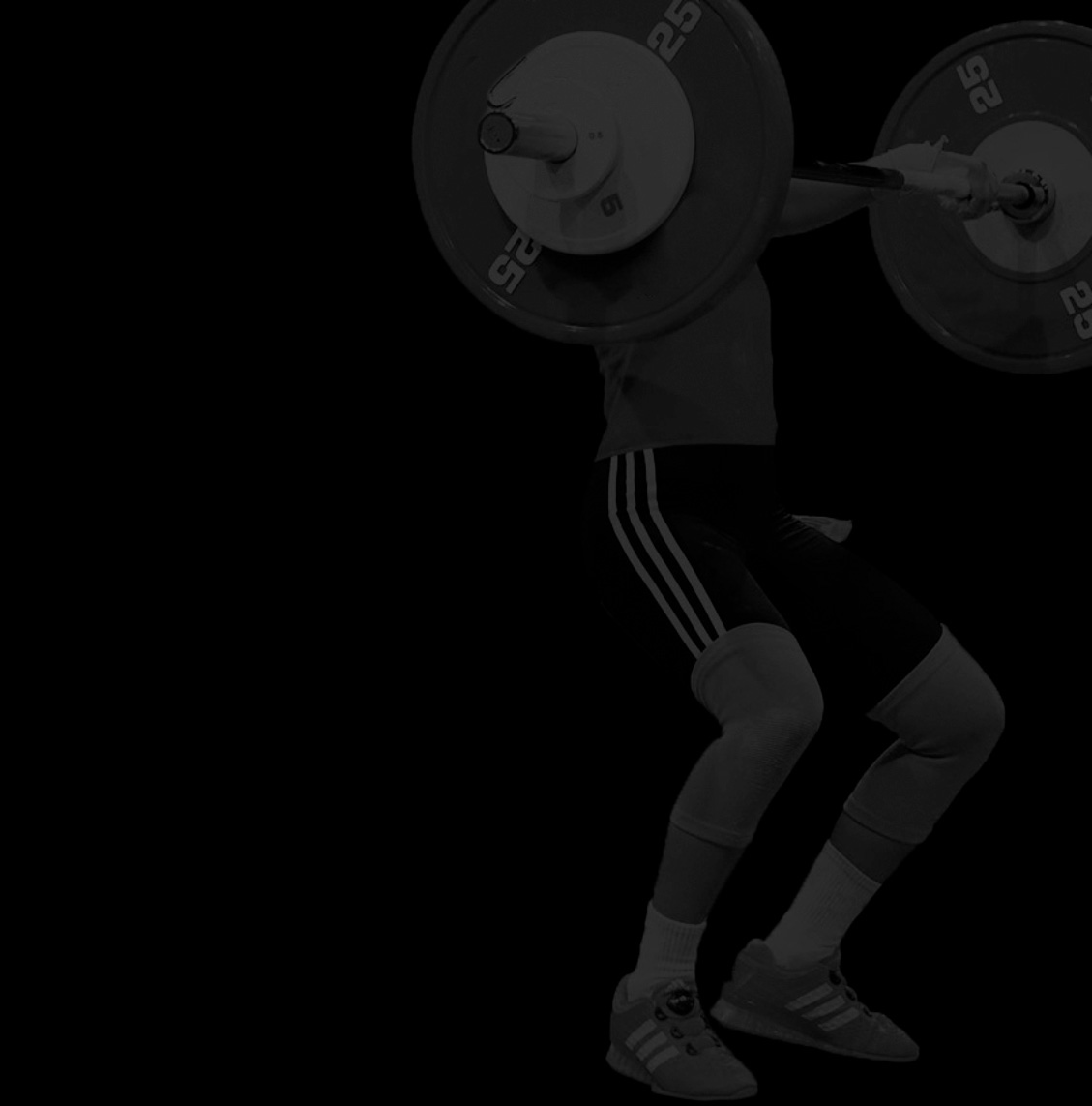
Pioneering Ahmed credits YOG for launching career

Weightlifter who became the first Egyptian woman to win an Olympic medal and the first Arab woman to get on the podium in her sport has inspired countless others across the Middle East. Sara Ahmed produced one of the most memorable feel-good stories of the Rio 2016 Olympic Games when she became the first Egyptian woman to win a medal in her country’s 104-year Olympic history. But the little weightlifter’s journey to becoming a trailblazer in the Arab world had begun two years earlier. “The Youth Olympics are one of the biggest competitions I have ever participated in and it had the greatest impact on the development of my performance.” It was at the Nanjing 2014 Youth Olympic Games that Ahmed first made her mark, winning the 63kg class at the age 16. “The Youth Olympics are one of the biggest competitions I have ever participated in and it had the greatest impact on the development of my performance,” she said. Asked if she was nervous before competing in Nanjing, the 1.55m-tall (5ft 1in) Ahmed replied emphatically. “Yes, oh yes, because I was so small and the competition was so strong, but thank God I achieved my goal and won the medal. “And my gold medal there was an incentive for me to prepare more and better for the Rio 2016 Olympic Games to gain a new medal for Egypt and for myself.” The bronze medal she won in Brazil, in the 69kg event, was historical in many ways: as well as being a first for an Egyptian woman, it was the first Olympic weightlifting medal to be won by an Arab woman and only the second by an African woman. It neatly illustrated sport’s ability to knock down social barriers and made Ahmed – who competes in a sport hijab and a full-length unitard – a role model for women across the region. “I was proud to achieve a greater goal and to improve the role of women in Egypt and Arab countries. It emphasised the role of women in the Arab world and that this is not less than the role of men in all fields.” After her success in Rio, Ahmed said she hoped others would follow in her footsteps and now, she confirms, that has happened. “Many athletes do weightlifting to be like me and I am so proud of that – to be a reason for increasing the number of women athletes in weightlifting, and also in other sports, to raise and increase their role in sports. “Female athletes tell me they were very happy and proud (when Ahmed won bronze in Rio) and started looking forward to achieving and being like me in their fields, always looking to reach to the high levels and be the best.” Ahmed hopes to see some of those women achieve success at the Buenos Aires 2018 Youth Olympic Games. And she has a message for all the athletes preparing for what will probably be the biggest event of their lives so far. “They must maintain their commitment to training and follow the instructions of their coaches to be more able to face stronger competition. They must insist on achieving their goals. “The Youth Olympics equip young athletes to prepare for even greater goals and be experienced to be able to participate in stronger championships, such as the Tokyo Olympic Games (in 2020).” Ahmed herself is training and preparing psychologically every day for her goal of “gaining a gold medal for Egypt in Tokyo”. Few would bet against her. Source: YOG Buenos Aires

Member Federations, attention! Launching of the IWF Online Entry System

IWF is pleased to announce the launching of the IWF Online Entry System of Athletes and Team Officials to the IWF Events! The first Event where you may use the Online Entry System – as an alternative to the traditional Entry Forms – is the 2017 IWF World Championships, Anaheim, USA. We remind you of the 2017 WWC Anaheim Final Entry Deadline: 27 October 2017. We accept Entries both online and by Entry Forms. All Preliminary of Final Entries received by today have been uploaded in the System. If you have not yet submitted your Entries you can do it now online with this application. If you have sent your Entries, we recommend you to check, finalize and verify your Final Entry before the 27 October 2017 deadline. Please complete the Entries – already submitted or new – with your Athletes’ / Team Officials’ photo for faster accreditation. The IWF Online Entry System can be accessed after filling in your username and password (sent to each Member Federation one by one). You can select English/French/Spanish/Russian but add names only in English, according to the passport. If you have any technical problem please contact:

IWF Coaching Course in Tunisia

In the framework of the IWF Development Program, the Weightlifting Federation of Tunisia organized a Coaching Course in Hamamat city (60 km far from the Capital, Tunis) from 27th September to 1st October 2017. Lectures were given by Mr. Maged Salama, while theoretical sessions were followed by practical ones. 29 coaches from Tunisia attended the course while additional coaches visited some of the sessions. Topics included: The physical fitness elements in weightlifting, The main muscles' work in weightlifting, Warming up and its importance during training and competition, etc. All participants evaluated the course to be a great success and coaches were delighted with the knowledge acquired. The IWF is happy that more and more Member Federations in Africa are using the opportunity provided by the IWF Development

International seminar and roundtable in Chile

"Perspectives of Weightlifting at School, University and Military Sector" Within the context of the II South American Youth Sports Games, Santiago de Chile 2017, the seminar and round table "Perspectives of Weightlifting at School, University and Military Sector" was held on the 4th, 5th and 6th of October in the Pierre de Coubertin Hall of the Chilean Olympic Committee. Delegates from different South American federations, Chilean federations of other sports and the Chilean Olympic Committee attended. This activity is part of the IWF Development Program through the South American Confederation of Weightlifting (CSLP); and was jointly organized by the Chilean Weightlifting Federation (FECHIPE) and the Universidad Santo Tomás. The inauguration was given by Mr. José Quiñonez, President of the South American Confederation of Weightlifting, addressing the relevance of Weightlifting at School, University and Military Sector, that shall be done with experts from each specific sector in order to learn from each experience. Then the Director of the Institute of Sports Sciences of the Universidad Santo Tomás, Rodrigo Alvarado, expressed his interest in linking the University with federated sports, either in theoretical or practical activities. Finally, the President of the Chilean Federation Italo Barattini emphasized on joining forces in caring out such activity while strengthening it and make such initiative permanent. Each of the three days included roundtable discussions where the representatives of the different countries were able to contrast their realities with the Chilean one. The aim was to improve the presence of weightlifting in South America. The first day the National Coordinator of Physical Activity of the Ministry of Education of Chile Patricio Venegas presented the way in which this Ministry relates to sport, emphasizing how sport helps the physical and mental health of students. During the discussions, representatives from Argentina, Peru, Brazil, Colombia, Uruguay and Paraguay took the floor to present similarities and differences regarding their countries, addressing specific themes such as: Age of onset Insurance and medical care National School Games Sport and study Flexibility of the study system Alliance between the Ministry of Sports, the Ministry of Education and the Federation Specific human resources International examples At local level, this activity served to link the Ministry of Education to the first National U12 Championships to be organized by FECHIPE for the first time on November 3-5. In addition to snatch and clean and jerk, physical tests being of great interest of the ministry were included. The second day featured presentations from Captain Ignacio Zamora and Coronel (R) Patricio Opazo, both of the Army Sports Federation, representing the National Defense Sports Confederation CODEFEN, organization formed by Army, Navy, Aviation and the Police. They presented the structure of the armed forces sports and their development depending on the specific jobs of military people involved and the interest towards civilian sport. FECHIPE invited the representatives of CODEFEN to send military sports instructors to participate in coaching courses to be held in the future. Brazilian coach Carlos Aveiro (Saúl) made an excellent presentation about the specific project carried out in that country as part of the preparation for the Olympic Games. During the roundtable the following topics were discussed among others: Historical relationship between this sport (and sport in general) with the Armed Forces Sports career and military career Benefits for the Armed Forces that have high performance athletes International experience and examples World Military Games and Weightlifting Weightlifting as a basis for other sports Insurance and medical care Special attention was paid to the link between weightlifters and military career with examples like Pyrros Dimas, Oscar Figueroa, and the military championships in the Dominican etc. The intervention of the President of the Colombian Weightlifting Federation touched a sensitive topic. He sees a possibility of collaboration with the end of the armed conflict with the guerrillas in his country through sport, offering a possibility for development on both sides. The third day was devoted to the relationship between sports and the University, starting with the presentation of the Executive Secretary of the Federation of University Sports FENAUDE of Chile Ricardo Peñailillo. He exposed the institutional structure and its relationship with weightlifting. Emphasis was placed on the weak South American participation in international weightlifting university events, particularly in the last edition of the Universiade held in Taipei. The following topics to strengthen the relationship with the authorities in the sector were also discussed: Benefits and scholarships for university athletes Scientific support for sport Athlete's career versus academic obligations Coaching career Quality control of processes Benefits for universities that have high performance athletes Insurance and medical care International experience World University and Universiade Championships The 2019 South American University Games will be held in the city of Concepción, Chile, and FECHIPE is already working on the possibility to add weightlifting to the program. Source: Italo Barattini, President

II Youth South American Games Santiago 2017

The 2nd South American Youth Games Santiago 2017 was held in Santiago of Chile from September 29th to October 8th, gathering 1248 athletes from 24 disciplines. Weightlifting competitions were held in the Olympic Training Center (CEO) between October 4th to 8th, with the participation of 75 young lifters (38 men and 37 women) coming from 10 countries (Brazil, Colombia, Venezuela, Argentina, Chile, Ecuador, Peru, Panamá, Paraguay and Uruguay). The “CEO” is a big sports complex, who lodges the Chilean Olympic Committee and Federations offices, plus the Institute of Sport of the Santo Tomas University and is the training place for more than 15 sports, including weightlifting. Many disciplines developed their competitions here, including weightlifting whose venue being one of the most spectacular ones in the entire place. Weightlifters showed outstanding performances, strength and talent during the 4 days event setting many new Youth South American Games records, showing a skip of quality compared to the first version of the games, in a spectacular venue and a joyful atmosphere heated by a generous public, great part of it watching weightlifting for the first time. Many national authorities such as the Ministry of Sport Pablo Squella and the President of the Olympic Committee Miguel Angel Mujica expressed their satisfaction for the level of the competition, the quality of the venue and the passion of the competitors and fans. The IWF was represented by Ursula Garza Papandrea, first woman Vice-President and President of the USA Weightlifting Federation, José Quiñonez, IWF Vice-President and President of the South American Confederation of Weightlifting and Luis Zambrano, Executive Board Member and President of the Federation of Ecuador. Social media and TV transmissions both deserve a special mention with thousands of visits during the weightlifting competitions. Brazil was the leader in the overall medal table, however Colombia with 6 gold, 3 silver and 2 bronze, was the winner in weightlifting. The rest of the medals were distributed between Ecuador (2, 4, 1), Venezuela (2, 2, 0), Perú (1, 1, 4), Argentina (1, 1, 1), Panamá (0, 1, 0), Chile (0, 0, 3) and Brazil (0, 0, 1). Source: Federación Chilena de Levantamiento de Pesas