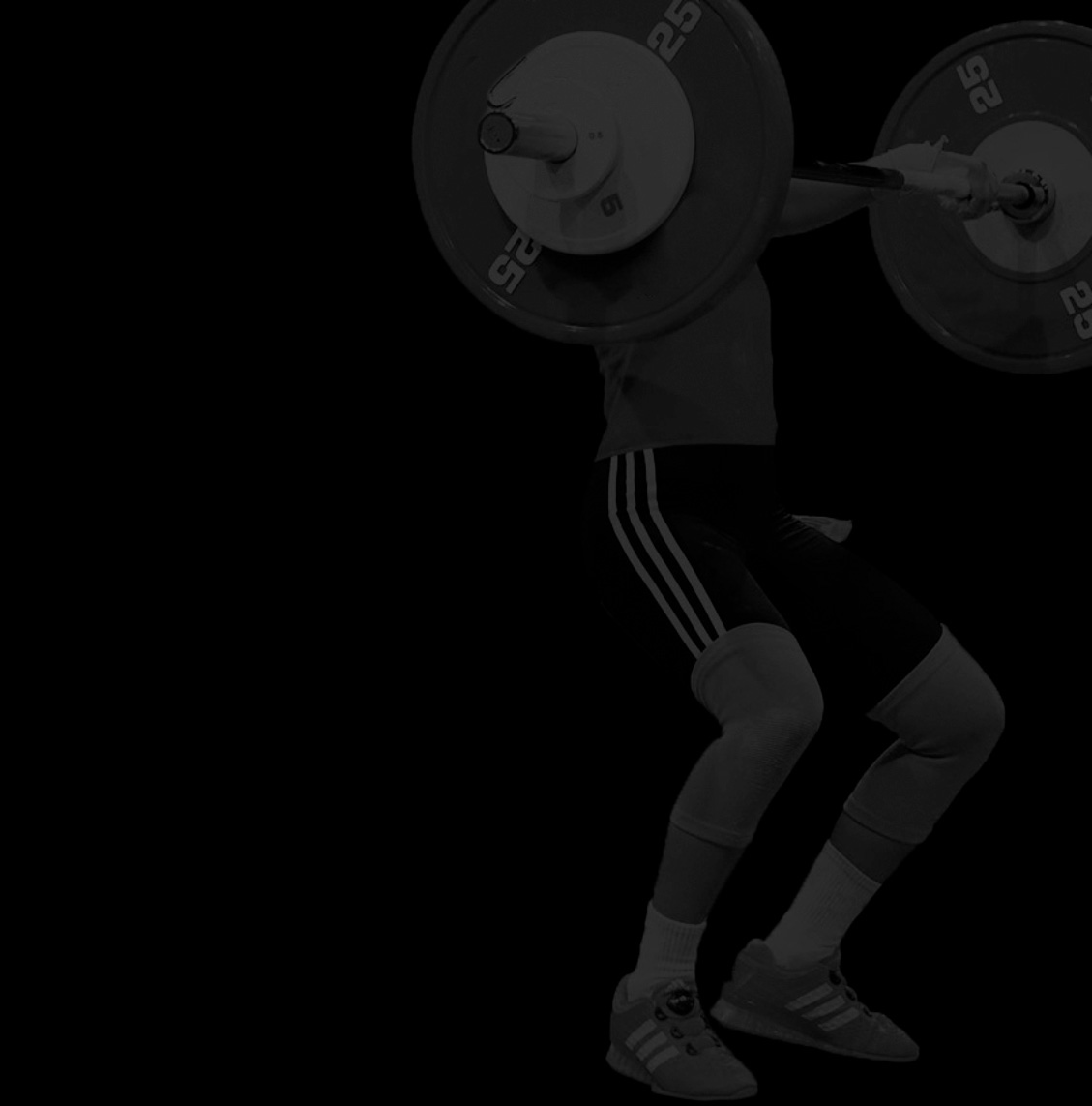






KeepOurTanker.com American Open Results, Amanda Hubbard and Chad Vaughn Outstanding Lifters
KeepOurTanker.com American Open Results1st Day After placing 16th at the World Championships in South Korea three weeks ago in the 53kg division, Sarah Davis (Rincon, Ga.) came to Mobile with something to prove. "I knew my training had been going so well before the Worlds and I wanted to come here and do the lifts I knew I could do," Davis said. Davis beat her Worlds total by five kilograms, lifting 72kg in the snatch and 92kg in the clean and jerk for a total of 164kg. "I just wanted to have a good time here," said Davis whose total beat her closest opponent by 10kg. "There was a lot more pressure at Worlds, but I wasn't nervous here. I felt good and it showed." This is the fourth national event Davis has won this year after taking titles at the Collegiate Nationals, Senior Nationals and Rodger DeGarmo Invitational. Davis hopes to have another opportunity to succeed at the World Championships in 2010. "Going into the Worlds I was excited to have made the team, but I thought the other girls would be so much better than I was and I got nervous, but then I realized that I was good enough to be there on the platform with everyone else. I don't think I proved that there, but I know that I can be a lot more competitive," Davis said. Amanda Hubbard (Ann Arbor, Mich.) also was scheduled to compete at the World Championships this year, but a torn ligament in her elbow at the DeGarmo Invitational in August kept her out of the event. Although this was Hubbard's first event since the injury, she won the gold medal easily, defeating her opponents in the 58kg division by a margin of at least 24kg with her total of 193kg. "I had a PR in my clean and jerk (108kg), so that was good, but I still wanted to do better," Hubbard said. "Next year I want to make the Pan Am Team and medal. And I want to make the World Team and actually get to compete this time. I'd be really happy if I placed in the top 10 there." A former 53kg lifter, Rachel Churchward (Edmonds, Wash.) moved down to the 48kg division and won her first national level event at her new weight. "I'm still working on performing well at national events and this is my first time at 48, but I wanted to give it a shot to see if I could do it and how I would perform," Churchward said. Churchward distanced herself from the other athletes immediately with opening attempts that were heavier than her opponents as she went five-for-six on attempts, lifting a total of 142kg. Although he didn't win his 69kg division, 17-year-old Peter Musa (East Stroudsburg, Pa.) set three new school-age American Records for athletes ages 17 and under. Musa broke his own records of 133kg in the snatch and 143kg in the clean and jerk, by a kilogram each and two kilos in the total where he won the silver medal against senior players. "I've actually lifted more than that, just not in a national meet, so I wasn't thinking about records," Musa said. "I just want to focus on what's coming up next." 2nd Day Sometimes it takes time away from something you love to realize what it means to you. Or so it seemed for two-time Olympian Chad Vaughn (Florence, Texas) who spent more than a year away from major competition after the Beijing Olympic Games. Vaughn looked like no time passed at all when he won his third title at the KeepOurTanker.com American Open in Mobile. Vaughn's lifts totaled 317kg in his 77kg division - just five kilograms away from his results at the 2008 Pan American Championships and 27kg ahead of silver medalist Mike Cerbus (Cortland, Ohio). Although Vaughn is enjoying being back on the platform, he said his focus is on enjoying the sport he loves and not on the 2012 Olympic Games. "I would love to be able to go to London, but I'm just trying to be patient and make it one day at a time of training and one competition at a time," Vaughn said. Erin Wallace (Shreveport, La.) led the 75kg division from start to finish, winning the gold medal with a total of 211kg, beating her previous best result by 10kg and being one of five athletes to complete all six of her lift attempts during the day. "I'm pretty excited. Six-for-six, can't really complain about that. This was a 10 kilo PR total for me so it was a good meet," said the first-time KeepOurTanker.com American Open Champion. "Anything over 209 I would have been happy with, but I try not to think about numbers. I just let me coach tell me what to do, basically, because I don't want to be too concerned about it" In one of the day's most exciting battles, three athletes were in close contention for the men's 85kg title. Eighteen-year-old Jared Fleming (Pine City, N.Y.) led Paul Roberts (St. Charles, Mo.) by a kilogram with his snatch of 141kg. Fleming opened the clean and jerk portion of the event with a lift of 165kg to Roberts' 160kg. It was Michael Tirrito (Livingston, N.J.) who was determined to make a statement as he attempted to move out of his third place status with a huge opening lift of 170kg. Tirrito's ambition didn't pay off, however, as three attempts later he was unable to complete the lift and did not post a total for the competition. Fleming, however, won the division after he lifted 170kg on his third attempt for a total of 311 to Roberts' 300kg. Six-time Senior National Champion Danica Rue (Jersey City, N.J.) won her American Open title in the 69kg division by one of the greatest margins of the day. With 22kg separating her and silver medalist Kelly Lynch (Colorado Springs, Colo.), Rue earned the gold with a snatch of 85kg and a clean and jerk of 112kg. Phil Sabatini (Lexington, Va.) may have gone six-for-six to win the 94kg gold medal with a total of 323kg, but the fight for second place kept the crowd entertained for the entire session as Jonathan North (San Ramon, Calif.) edged out Frankie Murray (Floral Park, N.Y.) If an award was given for "Crowd Favorite," North might have won it as he played up his quest, before, during and after the lift. An athlete who thrives off energy from a crowd, North invited people to "watch this!" as he would announce that he was going to "snatch this" on a clean and jerk attempt. Before his snatches he would often invoke the name of whomever was going to serve as his inspiration, be it an athlete from his club or German Olympic Champion Matthias Steiner. Although North looked to have been injured after his final snatch, he returned for the clean & jerk competition where his lift of 176kg was the best of the day. In addition to medals awarded during the day, two other former athletes were recognized of their achievements. During the competition, Joe Dube (Baldwin, Fla.) was recognized for being the last U.S. man to win a world title in weightlifting 40 years ago. Dube thanked USA Weightlifting CEO Rick Adams (Colorado Springs, Colo.) for his plaque and then gathered a crowd of lifters around him as he rallied America's young athletes to make it their mission to bring a gold medal back to the United States. Maher Baker (Longwood, Fla.) also was recognized during the event. The 20-year-old competed in the 85kg division, but will be leaving the sport to represent the United States in a new way as he recently announced his decision to join the Navy. 3rd Day The KeepOurTanker.com American Open concluded on Sunday in Mobile with gold medalists named in the heavyweight divisions. Although she is often known as the younger sister of New York Jets player Nick Mangold, 20-year-old Holley Mangold (Centerville, Ohio) made a name for herself several years ago when she garnered media attention as a female offensive lineman who played varsity at Alter High School in Dayton, Ohio. Now Mangold has focused her efforts away from football and toward weightlifting. Though she is still new to the sport with only eight meets to her credit, Mangold improved her total by 30kg between the Junior Nationals in March and Saturday when she won the +75kg division at the American Open. Mangold's total of 220kg established her as one of the top three women's heavyweights in the United States. Two-time Senior National Champion Donald Shankle (San Ramon, Calif.) lifted a total of 350kg to win the 105kg division by 35kg. Although he won the division with one of the top totals for a U.S. player in his division this year, Shankle said he was looking for better results. "I didn't do very good for as hard as I trained. I was capable of at least 15, 20 kilos more on my total," Shankle said. "I haven't competed nationally for awhile. I came off a big weight loss for this meet, too. I lost about 40 pounds over a five-month time frame, but no excuses for not doing how I wanted." Shankle remains focused on his goal of qualifying for the 2012 Olympic Games in London. "Short term, I want to make the Pan Am Team, make the World Team and then medal at the Olympics." In the men's +105kg division, juniors Zachary Schluender (Shreveport, La.) and Caleb Ward (Pleasonton, Calif.) were tied for the top placing after the snatch with 157kg each. Although Schluender opened the clean & jerk portion of the event with a lighter lift of 187kg to Ward's 190kg, Schluender ended with a clean and jerk of 198kg to 195kg to win the gold medal. At the conclusion of the event, 58kg gold medalist Amanda Hubbard (Ann Arbor, Mich.) was named the Outstanding Female Lifter and 77kg gold medalist Chad Vaughn (Florence, Texas) was named the Outstanding Male Lifter. The winners in each devision: Women's 48kg1. Rachel Churchward (Edmonds, Wash.)Women's 53kg1. Sarah Davis (Rincon, Ga.)Women's 58kg1. Amanda Hubbard (Ann Arbor, Mich.)Women's 63kg1. Rizelyx Rivera (Moorestown, N.J.) Women's 69kg1. Danica Rue (Jersey City, N.J.)Women's 75kg1. Erin Wallace (Shreveport, La.)Women's +75kg1. Holley Mangold (Centerville, Ohio) Men's 56kg1. Vang Weced (Sacramento, Calif.)Men's 62kg1. Kyle Yamauchi (Honolulu, Hawaii)Men's 69kg1. Derrick Johnson (St. Louis, Mo.)Men's 77kg1. Chad Vaughn (Florence, Texas)Men's 85kg1. Jared Fleming (Pine City, N.Y.)Men's 94kg1. Phil Sabatini (Lexington, Va.)Men's 105kg1. Donald Shankle (San Ramon, Calif.)Men's +105kg1. Zachary Schluender (Shreveport, La.) (by Nicole Jomantas,