News and Media

News

How to Build Jumping Ability in Weightlifters

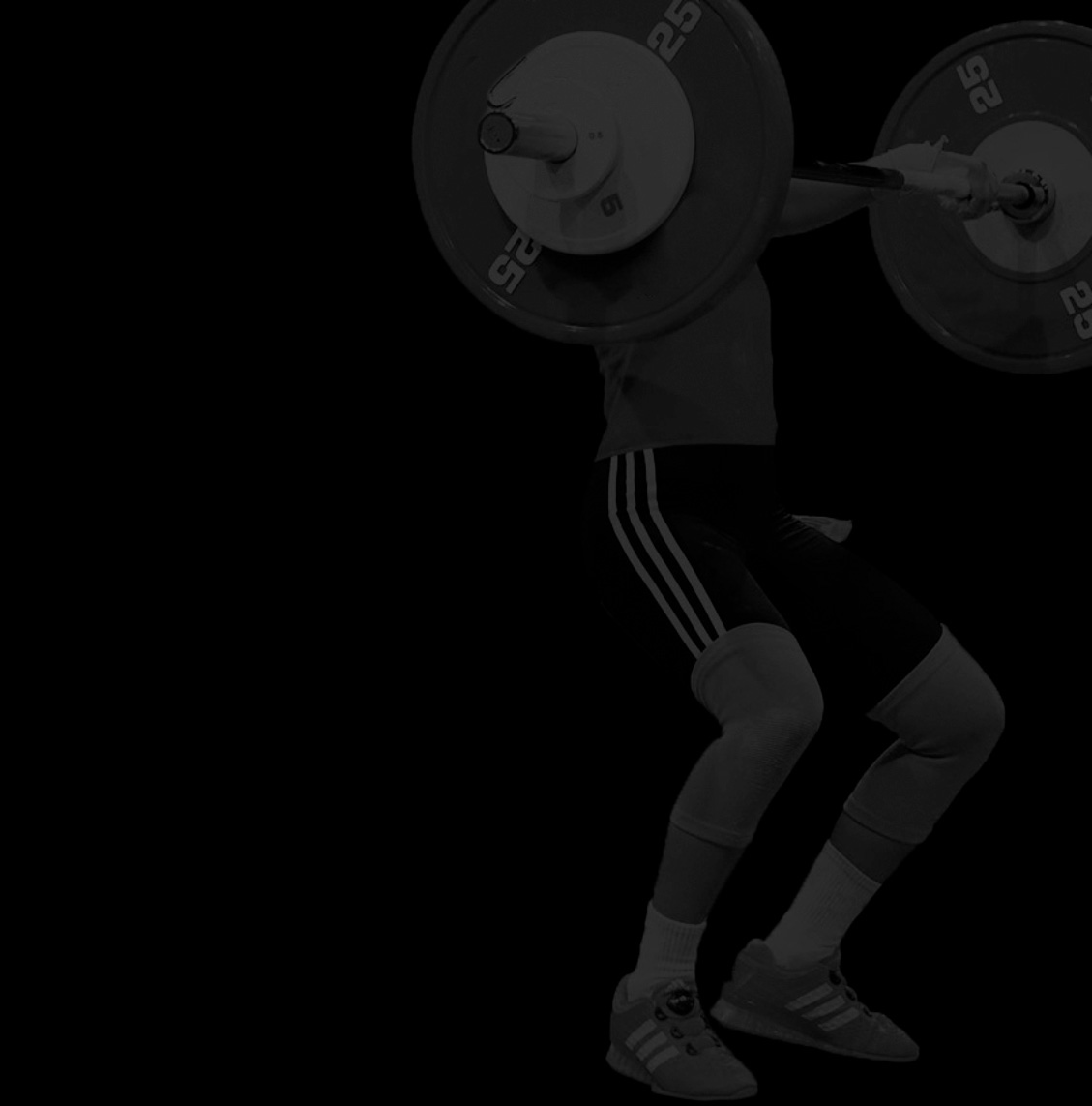
Weightlifters are legendary for their vertical jumping abilities, and that may be one of the factors that makes the snatch, clean, and jerk so attractive to strength and conditioning coaches anxious to develop “hops” in their athletes. Some observers, however, have noted that perhaps the lifts weren’t so much the cause of the jumping proficiency as they were symptoms of selected athletes who already had exceptional jumping skill. It appears both viewpoints are true. Most talented weightlifters are exceptional jumpers and performing the snatch and the clean and jerk properly enhances jumping ability. It is the movement pattern employed by the legs and hips in jumping that is also instrumental in developing great pulling power. Jumping ability is often a selection factor in the talent identification process for state sponsored weightlifting programs. It has been reported that weightlifters in elite programs are expected to be able to jump, with a countermove, up onto a platform set at nipple height. I’ve personally seen members of the USA weightlifting team jump up to a platform level with the athletes’ clavicles. This ability is partially due to great leg strength and also to a proper extension pattern of the legs and hips. Those aspiring to improve their weightlifting results need to improve jumping ability, and this is best done early in the athletic development. Jumping movements can be learned and practiced during pre-adolescence, and are of great value for the developing weightlifter. As long as they are not practiced excessively to the point of joint trauma, jumping movements are an extremely valuable component of early athletic development. Read more here Source: Breaking Muscle Written by Bob Takano Contributor - Olympic

PAWF Symposium and Congress

The Pan-American Weightlifting Federation is organizing a Best Practices Symposium on NFs Management and High Performance in Houston, Texas on 21-24 February 2013. The Symposium will be held in conjunction with the Pan-American Weightlifting Federation Congress hosted by the United States Olympic Committee (USOC), the USA Weightlifting, the city of Houston and the Pan-American Weightlifting Federation. Webcasted on USA Weightlifting website http://www.teamusa.org/USA-Weightlifting.aspx on February 22, 2013, 09:00am, Mountain Standard

IWF Technical Visit in Tashkent, Uzbekistan

Attila Adamfi, Competition Director and Eva Balogh, Office Manager arrived in Tashkent for a technical visit to prepare the IWF Congress and 2013 Youth World Championships, YOG qualification event to be held between 6-13 April, 2013. The IWF delegation visited the venue of the Congress and the Uzbekistan Sport Center and discussed all the issues related to holding both events. The Weightlifting Federation of Uzbekistan has organized several Asian events at high level, however a World Weightlifting Championships will be held there for the first time. Under the leadership of Shakhrillo Makhmudov, General Secretary they provide excellent conditions for both the Congress and the competition. The IWF delegation had a discussion with the new leaders of the Olympic Committee of Uzbekistan: Mr. Mirabrar Usmanov, President and Mr. Oybek Kasimov, General Secretary, furthermore with Mr. Jasur Akramov, Deputy Sport Minister. They confirmed that the Government of the country pays great attention to this event and assured the IWF about their full

Weightlifting confirmed as core sport for the 2020 Olympic Games

IOC Executive Board recommends 25 core sports for 2020 Games The Executive Board (EB) of the International Olympic Committee (IOC) today agreed on the 25 sports it will propose to the 125th IOC Session for approval as the core sports for the 2020 Summer Olympic Games. The 25 sports are: athletics, rowing, badminton, basketball, boxing, canoeing, cycling, equestrian, fencing, football, gymnastics, weightlifting, handball, hockey, judo, swimming, modern pentathlon, taekwondo, tennis, table tennis, shooting, archery, triathlon, sailing and volleyball. The EB recommended that wrestling, governed by the International Federation of Associated Wrestling Styles (FILA), not be included on the list of core sports. Wrestling will now join the seven shortlisted sports – baseball/softball, karate, roller sports, sport climbing, squash, wakeboarding and wushu – vying for inclusion in the 2020 Olympic programme as an additional sport. The eight sports are scheduled to make presentations to the Executive Board at its meeting in St Petersburg, Russia, in May. The EB will select which of the eight sports to recommend to the 125th IOC Session for inclusion as an additional sport on the 2020 programme. In an effort to ensure the Olympic Games remain relevant to sports fans of all generations, the Olympic Programme Commission systematically reviews every sport following each edition of the Games. Golf and rugby sevens were added in 2009 as additional sports to the 2016 Olympic programme. Official article on the IOC Website The review considered factors as the sports' universality, and television viewing figures. The most “influential factors” in the decision, the IOC spokesman said: “This process has been going on for more than a year, and it was extremely comprehensive. People from all of the sports were interviewed, and data was put together“. The sports management, the financial stability, the events calendar, spectators as well as grassroots development were also matters of concern in the decision making process. The decision of the IOC Executive Board confirms the stability of the weightlifting sport in the Olympic movement. Read the letter of the IOC President addressed to the IWF