News and Media

Archive from

PUBLIC DISCLOSURE

IWF reports that the sample of Mr. Juan Felipe SOLIS ARBOLEDA (COL) has returned an Adverse Analytical Finding for Boldenone and metabolite (S1.1 Anabolic Androgenic Steroids). As a consequence, the Athlete is provisionally suspended in view of a potential anti-doping rule violation. In any case where it is determined that the Athlete did not commit an anti-doping rule violation, the relevant decision will also be published. IWF will not make any further comments on the case until it is

PUBLIC DISCLOSURE

IWF reports that the sample of Ms. Ana Iris SEGURA (COL) has returned an Adverse Analytical Finding for Boldenone and metabolite (S1.1 Anabolic Androgenic Steroids). As a consequence, the Athlete is provisionally suspended in view of a potential anti-doping rule violation. In any case where it is determined that the Athlete did not commit an anti-doping rule violation, the relevant decision will also be published. IWF will not make any further comments on the case until it is

Weightlifting: What’s Old Is New Again as a 2020 Trend

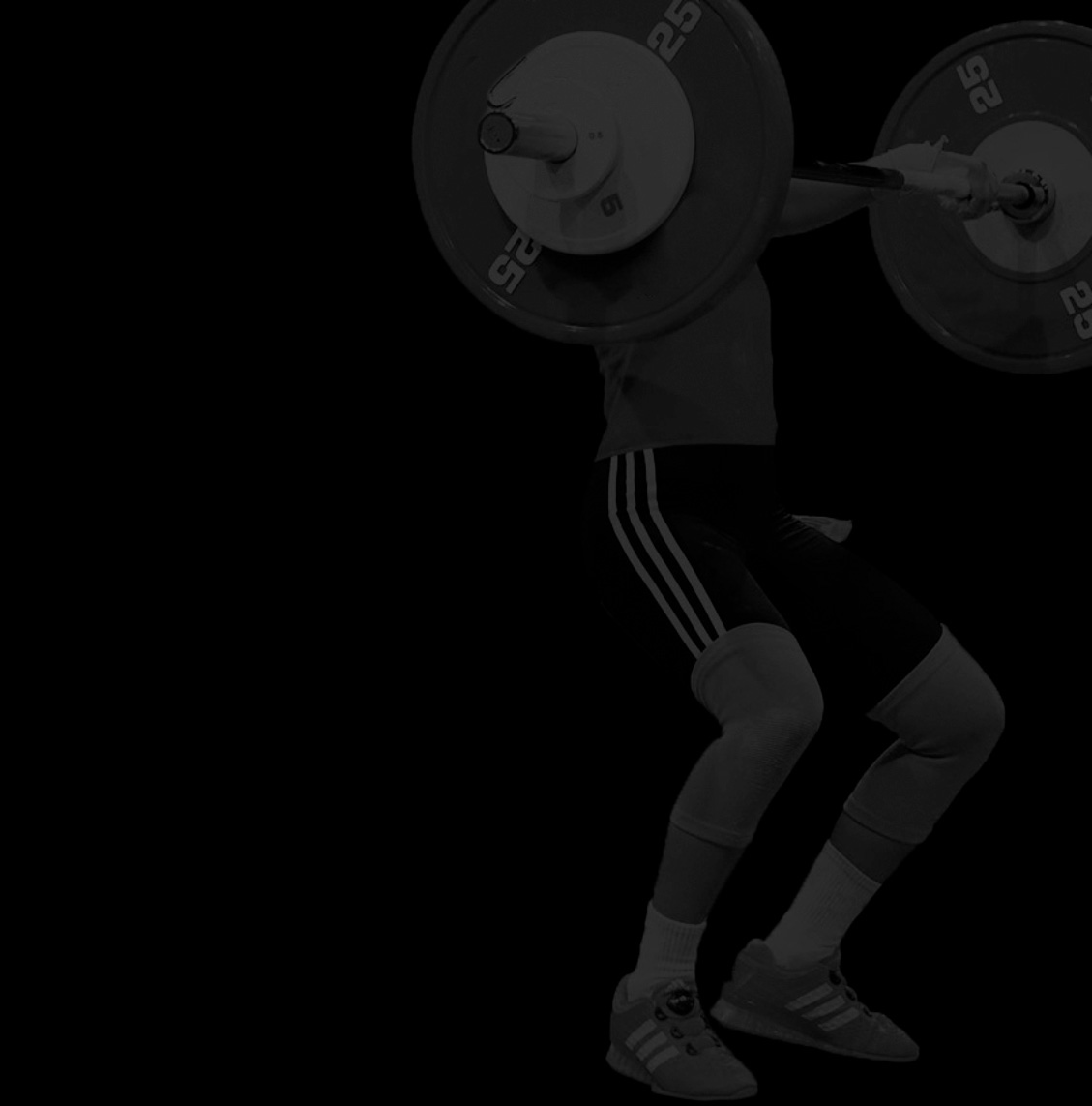
Weightlifting has been a form of exercise for centuries, but recent studies show that the use of barbells and free weights is coming into vogue again.     (Article by Eleiko)  Weightlifting has been part of human culture for thousands of years, and it remains part of it in 2020. In fact, history often repeats itself, and this repeating trend rings true with weightlifting. Looking back into the recent history of sport, health and fitness, we can see that the advent of the barbell in the 1860s and then adjustable-weight barbell in the early 1900s, propelled weightlifting to new heights. Strength historian David P. Willoughby called the invention of the barbell “the single greatest impetus was ever given to weightlifting in this country.” In the early to mid-1900s, weightlifting was used as the mainstay for increasing strength, power and aesthetics to benefit health and performance. This was achieved primarily with barbell exercises and aided by dumbbell exercises. Moving into the 1970s and through the 21st century, a dramatic increase occurred in health clubs aimed at promoting exercise to the general population. With this cultural change, the barbell and free weights took a back seat to the use of weight machines. These machines were thought to be easier and safer on a mass scale and to simplify lifting by decreasing the skill and balance required to perform exercises as well as allowing patrons to more easily adjust weights. Some recent data suggests we may be returning to our barbell/free weight roots. In late 2017 the Wall Street Journal reported that many traditional health clubs were beginning to scale back on exercise machines to make space for more free weights. IHRSA also produced a report in 2017 stating that although men and women have traditionally desired different gym experiences (men preferring free weights and solo workouts; women preferring group exercise and choreographed classes) this appears to be changing. Men and women now have nearly the same participation levels in fitness-only and/or personal/small group training studios. This trend is likely to continue because millennials and Generation Z tend to prefer these types of workouts. More importantly, nearly half of all health club members are 18-44 years old. Cross Fit, too, has had an impact on preferred types of training and equipment. No longer are barbells and free weights reserved for athletes or elite lifters. They are now acceptable, and arguably preferred, implements for achieving health and fitness results. Despite this return to more barbell and free weight training, many facility owners and operators still harbour concerns about safety and skill requirements. Although any exercise carries an inherent risk, research shows the per cent of injuries from tripping/falling on a treadmill is higher than injury from falling/dropped free weights. That said, it is imperative to have the right equipment, proper space allocation, education and training. Below are three areas to consider as you adapt to this trend. 1. Equipment concerns When considering equipment needs, quality is vital. If possible, purchase certified equipment (by IWF, IPF or WPPO) from a reputable company. This ensures the equipment meets a high standard of performance and resiliency. Improperly constructed bars and plates pose a safety risk as they can deform, function poorly and break when used for prolonged periods of lifting. 2. Space allocation Space allocation is essential for safe and enjoyable lifting. Make sure your club has adequate ceiling height free of fans and light fixtures. Because the use of lifting platforms is recommended for lifter safety and floor protection, ensure enough room is provided around the platforms for lifters to load and unload the equipment as well as rest without being in the way. 3. Education and training Having the right equipment and space for weightlifting is a great start. Getting the proper education and training brings it all to life. Seek education from a reputable organization that provides step-by-step instruction aimed at the general population. The training should be practical, hands-on and able break down each lift into simple parts that can be easily assimilated with programming. The return of weightlifting into mainstream health and fitness will infuse excitement, energy and motivation into patrons and facilities everywhere. By taking a few steps to be better prepared for this growing trend, you will provide a safe, enjoyable, challenging and results-oriented environment. This is the type of atmosphere people want to train
Pan American Weightlifting Federation Electoral Congress

The Pan American Weightlifting Federation held its Electoral Congress on 22 February 2020 in Santo Domingo, Dominican Republic. All 28 Member Federations from the Continent participated. Luis Mejia Oviedo, President of Dominican Olympic Committee and IOC member greeted the delegates in the presence of Ivan Dibos, IOC member from Peru. IWF was represented by Mohammed Jalood, General Secretary, Intarat Yodbangtoey, 1st Vice President, Nicu Vlad, Vice President, Attila Adamfi, Director General and Timea Horvath, Development and Education Manager. The new PAWF Executive Board: José Quiñones (PER) - President William Peña (COL) - General Secretary Gustavo Malgor (ARG) - 1st Vice President Luis Seijas (VEN) - Vice President Andres Vargas (PUR) - Vice President Phil Andrews (USA) - Treasurer Nadia Alvarado (MEX) - Member Luis Zambrano (ECU) - Member Henry Phillips (PAN) - Member Technical Committee Joe Triolo (USA) Maritza Ortiz (DOM) Jose Enrique Alarcon (ECU) Medical Committee Dr Mark Lavallee (USA) Dr Roxanna Vargas (DOM) Dr Ricardo Guerra (CUB) Coaching & Research Committee Kyle Pierce (USA) Carlos Cuervo (CUB) *Run-off to be held between Maria Isabel Urrutia (COL) and David Montero (BRA) in the coming Congress. The new Executive Board held its first meeting on the same day where they appointed the following Co-opted Members: Andrew Callender (BAR) - to represent the interest of the Caribbean Juan Carlos Aburto (CHI) - representative of the host of the next Pan American Games Osmar Urbieta (PAR) - representative of the host of the next South American Games The EB appointed Phil Andrews (USA) as Director General. Among the urgent improvement of the Federation, with a view to addressing governance, the EB created the following Commissions seeking one member from each region of the Continent: - Governance Review - Equality - Member Federation Governance Support IWF congratulates to all elected officials and wishes them a prosperous and successful

Coaching and Anti-Doping Seminar in Tashkent

On 13th February 2020, a Coaching and Anti-Doping Seminar was conducted for the participants of the Asian Youth and Junior Championships in Tashkent, Uzbekistan.     The seminar was opened by Mr Mohammed Jalood, IWF General Secretary and Mr Bahtiyor Abdukarimov, General Secretary of Uzbekistan Weightlifting Federation. The anti-doping part was presented by Ms Galiya Zhumbayeva and Ms Maira Bakasheva from Central Asian RADO. They talked about the procedures and behaviour of the athletes and also gave information about the coaches and federation's responsibility in the fight against doping. Mr José Quinones, IWF Vice President and Chairman of the IWF Development and Education Commission provided information about the IWF Development Program. He explained the details of the application, the forms to be completed and the possibilities, for what can the federations apply. Finally, Mr Milan Mihajlovic, Member of IWF Technical Committee, presented the importance of implementation of IWF TCRR during weightlifting events. The coaches got practical advice about their behaviours during competition. Examples were shown of the different Technical Officials' roles (Chief Marshal, Technical Controller, Timekeeper, etc) and their procedures, what are their duties and what can and have to do the coaches during the competition. The feedback of the seminar was very positive, in the end, the participants signed the PLAY TRUE flag, showing their determination for the clean

IWF 2019 LIFTER OF THE YEAR – AMERICAN AND GEORGIAN WINNERS

Nye for the first, Talakhadze for the third time Just like in 2017 and 2018, Lasha TALAKHADZE became the year’s Best Male Lifter in 2019 again at the Lifters of the Year election. In WORLD WEIGHTLIFTING’s voting, the Best Woman Lifter is Katherine Elizabeth NYE. Starting with the latter is not only dictated by politeness but also because NYE – last year’s 71kg world champion – earned this title for the first time and, what is more, this is the first time since 1982 that a USA athlete has won! Among the men there is no change in the last three elections: Georgia’s giant, TALAKHADZE celebrates his third victory in a row. No wonder, he laid the foundations for this honour with further stupefying world records and another world champion title in 2019 in the superheavy category. Another record has been registered in this election: more than 50 thousand, precisely 50,514, ballots were cast online on the IWF website for the five male and five female pre-selected lifters, each of them world champions in 2019. The male candidates received 2,000 votes less than the female quintet. NYE received 9,105 votes for her pole position; followed by KUO Hsing-Chun from Chinese Taipei with her 7,755 nominations of best lifter. In third place we have Colombian Arboleda Leidy Yessenia SOLIS with her 4,784 votes. In men, TALAKHADZE overwhelmed with his 17,084 votes; Armenian Simon MARTIROSYAN was given 5,514 and third-placed Chinese LYU Xiaojun earned 2,169 votes from the fans. It is worth noting that LYU had already been on the peak a decade ago: in 2009 he was the Lifter of the Year. Congratulations to all these wonderful champions!   VOTING RESULT 2019 Men 1       TALAKHADZE Lasha                         GEO        +109kg            17,084 2       MARTIROSYAN Simon                      ARM        109KG               5,514 3       LYU Xiaojun                                         CHN        81kg                   2,169 4       SHI Zhiyong                                         CHN        73kg                   1,053 5       OM Yun Chol                                       PRK        55kg                      410 Women 1       NYE Katherine Elizabeth                   USA        71kg                   9,105 2       KUO Hsing-Chun                                TPE         49KG                  7,755 3       SOLIS Arboleda Leidy Yessenia      COL        81KG                  4,784 4       DENG Wei                                            CHN        64kg                   1,796 5       RIM Jong Sim                                       PRK        76kg