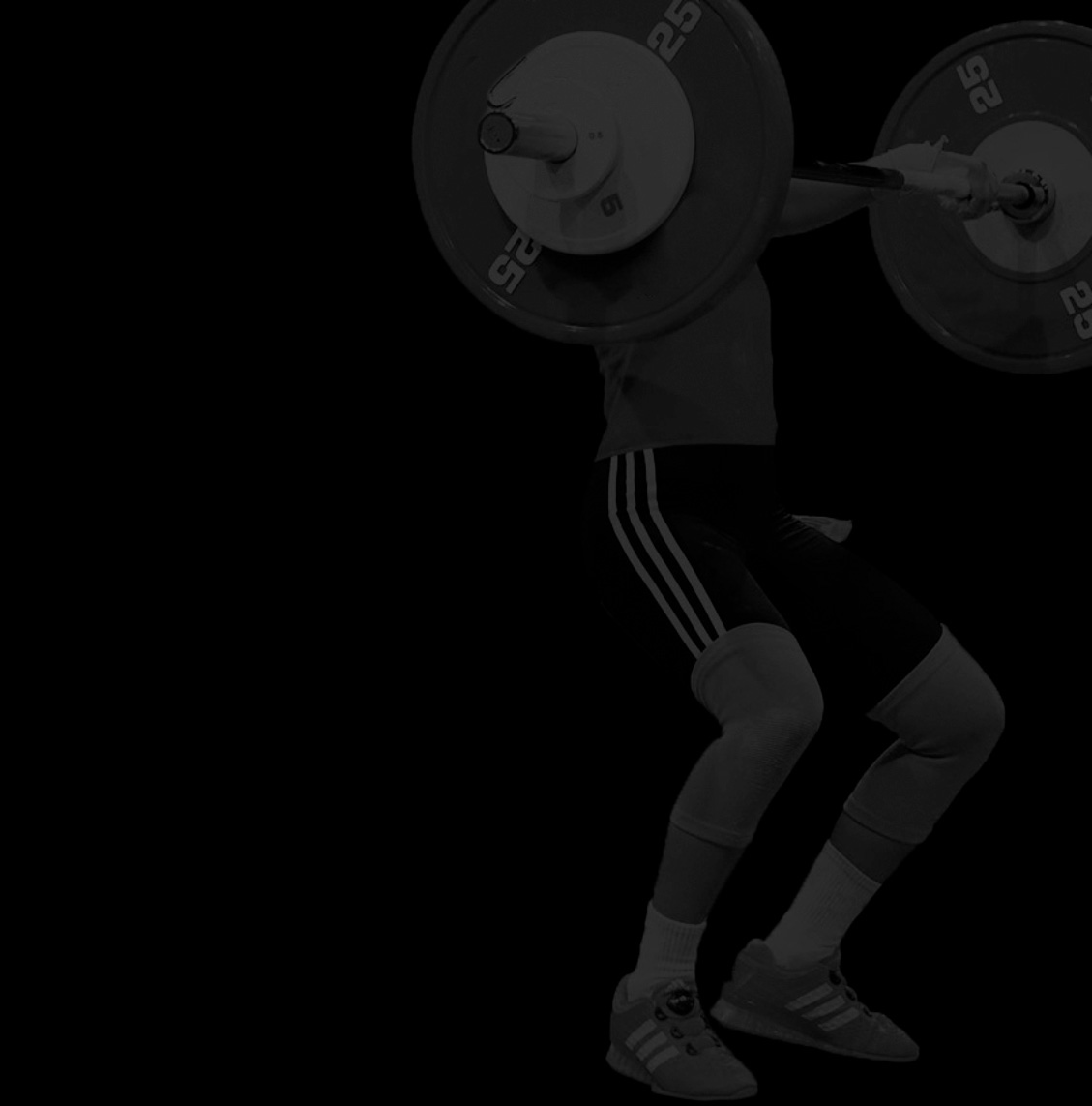






Why Weightlifting Shoes?
It is common knowledge that an athlete’s apparel varies according to the sport. This is especially true for shoes. In his book The Dialectics of Nature, the Marxist philosopher Engels observed the harmony between form and function in nature. The need for harmony between the form and function of the athletic shoe is absolutely imperative in sport. For instance, in Track and Field, the design and function of the athlete’s shoes for each event vary according to the specifics of the activity. A distance runner would not wear a sprinter’s shoes for the 10,000 meter event and vice – versa; yet both are running events. In many cases there is not a great deal of versatility in terms of what would appear to be similar athletic shoes. The spiked shoes designed for baseball are not appropriate for football even though both sports require a shoe that provides traction for running short distances. So, it should come as no surprise that there is a special shoe made for weightlifting. The weightlifting shoe is rather unique in the world of sports because it features a raised heel. The form of the shoe has evolved over the 100+ years of international weightlifting competitions. Today the form of the top model of weightlifting shoe is in harmony with its function in the modern competition program. The history of the design and the function of the modern weightlifting shoe is traceable in the history of the evolution of the technique of the weightlifting exercises. The Evolution of Weightlifting Technique: The Form and Function of the Modern Weightlifting Shoe Evolves Two fundamental elements of weightlifting technique have had the greatest impact for the creation of a specialized weightlifting shoe. Ultimately, they were the driving forces behind the evolution in the design of the footwear: 1) the method by which the weightlifter moved his body under barbell; 2) the disposition of the weightlifter’s principle “kinematic links” (the trunk, thigh and shin) in the starting posture to lift the barbell. Beginning in 1929, the International Weightlifting Federation reduced the competition protocol from five exercises to three. The new program consisted of one strength exercise, the press, and two-speed strength exercises which are the snatch and the clean and jerk. The press originally was intended to be a relatively simple test of the strength of the muscles of the arms and shoulder girdle. The snatch and clean jerk exercises, also known as the “quick lifts”, are exceptionally more complex. Essentially, the two “quick lifts” are a test of the explosive strength of the musculature of the lower extremities and trunk. The “descent” under the barbell for the snatch and the clean for the clean and jerk, is more complex than for the press because of the heavier the weight one attempts to lift, and, consequently, the greater the distance the lifter “drops” under the barbell. The Descent Under the Barbell The evolution of the “descent” under the barbell is connected with the effort to lower the trunk as far as possible. The ability to descend lower translated into bigger weights lifted in the snatch and the clean and jerk, i.e., the lower the “descent” under the barbell, the less height needed to lift the weight, the bigger the weight one could lift. The weightlifter’s search for a low stable, positioning of the body under the barbell for the snatch and the clean and jerk meant bending the knee, ankle, and hip joints as much as possible in order to effectively lower the trunk as far as possible. One early method of bending the lower extremities involved a slight knee bend and an asymmetrical shifting of the feet. It was called the “splot” (see figure). [caption id="attachment_23475" align="aligncenter" width="300"] Splot method of descending under barbell. F. Verkovsky, 1963[/caption] The “splot” method of slightly bending both knees and shifting one foot backwards (so the athlete partially scissored the legs and squatted at the same time, hence the name) was made obsolete by the “split” style. The “split” method involved shifting one foot forward in a straight line from its starting position and likewise the other foot rearward. A sufficiently large shifting of both feet into the “split” position lowers the trunk significantly further than either a one-quarter squat or a “splot”. Consequently, a weightlifter could expect to snatch and clean more weight with the “split style” of descending under the barbell. However, in each of the aforementioned cases (1/4 knee bend, “splot” and split style), the weightlifter’s shoes did not have to be of a special design because the ankle joints were not called upon to bend significantly with the performance of these methods. For instance, in the split style, the shin of the front foot typically would remain vertical in the lowest position; this helped maintain balance and kept the trunk in a vertical position. Lifters of the 20s and 40s and into the 50s wore sneakers. Many wore boxing shoes. Of the three main joints involved in lowering the weightlifter’s body (the ankle, knee, and hip), most of the bend in the split style came from the knee and hip joints. Before going any further, one should point out the obvious to the non-weightlifter that in order to snatch or clean a big weight by means of lowering the body under the bar, the lifter has to keep the trunk pretty much in a vertical disposition. It is all but impossible to hold a weight on the chest for a clean or overhead in a snatch with the trunk tilted significantly forward from the vertical. So, the flexing of the hip and knee in the split position and the disposition of the feet fore and aft has to be such that it allows the athlete to preserve a vertical position of the trunk. [caption id="attachment_23476" align="alignright" width="275"] Plukfelder (USSR). Photo European Weightlifting Federation.[/caption] The above figure of a split clean shows the low position with a vertical trunk and relatively vertical shin of the front leg. The weightlifter’s feet bend and straighten quickly in performing the weightlifting exercises. Some storage of elastic energy occurs. This is facilitated with flexible footwear. Furthermore, the weightlifter’s footwear needs to flex to perform the split style because the foot shifted backwards should rest on the ball of the foot and the toes with the heel raised off the floor (Figure 5 see rear foot). Conversely, the front foot needs to rest flat on the floor. However, it is not too difficult to keep the front foot flat if the shin is vertical. So, for the just described technique, a boxing shoe or sneakers would suffice. The Relevance of the Ankle Joint and Shin to Technique and the Design of Weightlifting Shoes The appearance in the international arena of “splitters” John Davis (USA), Norbert Schemansky (USA), Rudolf Plukfelder (USSR) and Ireneusz Palinski (POL) demonstrated to the weightlifting world it was possible to lower the body to as maximum as possible by means of the “deep “split” position under the barbell. The lifter accomplished this by noticeably bending the ankle joint of the leg placed forward. This requires tilting the shin forward significantly away from the vertical. The lifter could descend lower under the barbell. However, it was difficult to rest the front foot flat on the floor with the shin tilted way forward. (see figure of Plukfelder snatch) Nevertheless, the ankle joint has to bend (dorsiflex) significantly in order to effectively tilt the shin forward, and the lifter must flex the knee of the forward leg significantly to achieve the deepest position possible. [caption id="attachment_23479" align="aligncenter" width="258"] R. Plukfelder (USSR). European Weightlifting Federation picture.[/caption] The picture above shows Soviet great Rudolph Plukfelder attempting to descend under the barbell in a snatch into a “deep split” position. Note the athlete is wearing sneakers and the heel of the front foot has raised which will cause a loss of balance. With the advent of this technical innovation (the positioning of the feet in the “deepest” split position), weightlifters realized a shoe with a raised heel to allow the “flat footed” tilting of the shin was required. A shoe with a raised heel had to permit the back foot to flex so that the heel could be raised and at the same time the ankle joint of the front foot to bend. The raised heel facilitates the “flat footed” bending of the ankle joint and at the same time a fuller activation of the muscles of the lower extremities. (see pictures of Lopatin) [caption id="attachment_23478" align="alignleft" width="221"] R. Plukfelder (USSR). European Weightlifting Federation picture.[/caption] The picture of Lopatin in a deep split position shows a flat footed front foot and a significant tilting of the shin of the front leg. The higher heels of the Soviet shoes of this time permited this low position which would be precarious at best if attempted in sneakers or boxing shoes. Weightlifters realized high laced boxing shoes or sneakers which were commonly worn up to the 50s were not appropriate for the just described “deep split” technique. You could flex your feet to raise your heels in the pulling part of the lifts and the rear heel in the split position, but there was no raised heel and the lacing inhibited the movement of the ankle joint if the athlete went to tilt the shin forward. The Final Evolution of Weightlifting Technique: the Ankle Joint and Shin are the Keys Another innovation in weightlifting technique of the late 40s and early 50s helped to transform the weightlifting shoe forever. This was the squat style. The George brothers (Pete and Jim, USA) are credited with convincing the weightlifting world that this technique of descending under the barbell was superior to all other methods. The weightlifter simply moves his feet to the side and fully bends the knees, hips, and ankles to squat down under and “receive” the barbell at the chest for the clean or overhead for the snatch for the squat style technique. It was necessary (and difficult) to keep the front foot flat on the floor in the “deep split” style of descending under the barbell; however, it was absolutely imperative to rest both feet flat on the floor in the deep squat style technique. The weightlifter can lose balance very easily if the heels rise from the floor in the deep squat position. A weightlifting shoe with a raised heel was actually more important for the squat style of lifting than it was for the “deep split” style, i.e., the area of balance is smaller in the squat position. A shoe with a raised heel allows the weightlifter to squat down with a reasonably vertical disposition of the trunk which requires fully bending the knees and tilting the shins forward; with the feet resting flat on the floor , i.e., the lowest, stable position to support the barbell became possible. As the squat style began to catch on as the preferred technique, the search for appropriate shoes led lifters to try work boots and the like. These shoes (actually boots) had the raised heel but were also “high tops” in that the form of the shoes extended up past the ankle joint and were laced up past the aforementioned joint. These boots offered better stability than the boxing shoes or ordinary sneakers, but they still restricted ankle mobility. They were also generally stiff and heavy. Furthermore, in the early years of the evolution of weightlifting technique from the split to the squat style, the significance of joint mobility as a means to facilitate lifting bigger weights was not as accepted it as it is today. So, lifters sought shoes with higher heels (more than 2.5 cm) so that they could squat down and maintain balance. However, the built-up heels were a poor substitute for knee and hip mobility and, especially, ankle mobility. Early manufactured versions of a specialty weightlifting shoe from the Soviet Union and Europe featured a high top design with little or no heel, but, eventually, a higher heel (upwards of 2.5 cm) emerged. The fundamental flaw from the era with no specialty shoe persisted into the design of the specialty shoe, the “high top”, style shoe. These “weightlifting boots” (and this name persists to the present day) laced up past the ankle joint were assumed to provide support for the ankle joint. However, this type of shoe restricted, not facilitated, ankle mobility, especially concurrent with the bending of the knee; lo and behold, the ankle joints did not need support in the first place. The Starting Position for the Lift from the Floor (the Pull), the Press, and the Jerk As the technique of descending under the barbell evolved, weightlifters continued to search for more effective techniques of lifting the barbell as high as possible. This search found its expression in the starting position for lifting the barbell from the platform and in the starting position for the press and the jerk from the chest. Weightlifters instinctively realized that in order to accelerate a moving object you need to increase the distance over which force is applied to it and, at the same time use the body’s strongest muscles to the maximum. By beginning the lifts with more bending of the lower extremities, the best weightlifters could realize fully the strength of the body’s strongest muscles to lift the biggest weights. This “lower” starting position mechanically offered more possibilities. Some Asian lifters popularized a method of lifting which involved placing the heels together so that they could bend and, consequently, use their legs even more. It was known as the “frog style.” [caption id="attachment_23481" align="alignright" width="277"] Thongsuk (THA). Charniga photo[/caption] Starting position of the snatch depicting almost fully flexed knees, hips and ankles. Note significant forward tilt of the shins, which the athlete’s shoes with raised heels permits. The greater flexion in the lower extremities with this “low” start places a greater load on the these, the strongest muscles for weightlifting. Fully utilizing the strength of the legs allowed the lifter to keep the arms straight for as long as possible before bringing these muscles into play during the lifts. The weightlifter was able to lift bigger weights than ever before with the combination of greater lifting efficiency from the strongest muscles and the ability to descend lower and more efficiently than ever before. The jerk portion of the clean and jerk, and eventually the “Olympic Press” of the 60s and early 70s, required footwear to permit the lifter to bend flat footed. This flat footed bending of the lower extremities was facilitated by a shoe with a raised heel and an unrestricted ankle joint. Lifters who wore the “high top” Soviet made shoes did not bother to lace them up all the way (below the ankle joints) so that their shins could move unrestricted even though the movement of the ankle joint and shins during the half squat for the jerk and starting bend in the “Olympic Press” was rather small. The Evolution in the Design of a Specialized Weightlifting Shoe Of the early efforts to find a shoe for weightlifting such as a boxing shoe or a work boot, both types of shoes proved to be inadequate. One type (the boxing shoe) had no heel to facilitate ankle mobility, and ankle mobility was further restricted by the lacing over the joint. The other type (the work boot) had a heel which facilitated ankle movement, but the form of the shoe (called a “high top”) extended above the ankle joint. It was also stiff and heavy, both of which were counterproductive. One of the early designs developed and manufactured specifically for weightlifting, featured the “high top” design, a very low heel, leather soles and heels (Russian model). Typically, the heels were fastened to the shoe with nails. The first specialized shoes for weightlifting incorporated two features found in the types of shoes weightlifters tried when there were no specialized shoes for weightlifting, a “high top” and a heel. The raised heel was designed for ankle mobility and (flat-footed) balance, and, the perceived necessity of “supporting” the ankle joint with a “high top” carried over into the design of the first specialized weightlifting shoes. It is appropriate to point out during this discussion of the design of the specialized weightlifting shoe, the following fact: ankle joint injuries, per se, are virtually unknown in weightlifting. (See addendum Weightlifting Injuries) Eventually the “high top” design was displaced by the modern “low cut” shoe. The designers of the “low cut” made no effort to “artificially” support ankle movement. Anyways, lifters had long since quit lacing the high top models past the ankle joint. The Soviet made shoes with “leather heels, soles and nails” were ultimately displaced with the introduction of wood heels and crepe soles. The Soviet design was not just flawed but dangerous. The use of resin on the sole of the shoes by the weightlifter, especially before stepping onto the competition platform, in all probability was due to the propensity for weightlifters to slip and slide (especially while scissoring the legs under the barbell) in their Soviet made weightlifting shoes. (see picture) [caption id="attachment_23482" align="aligncenter" width="300"] V. Kanygin (USSR) Photo by T. Kono[/caption] The leather soles and heels of the Soviet-made weightlifting shoes predisposed the lifter to slip or otherwise slide on the wood surface of the weightlifting platform. If the head of the nails fastening the heels were exposed the risk of slipping was even greater not to mention the possibility of an exposed nail “catching” a crack in the surface of the platform. Without question, the principal attraction to the Soviet-style shoes within the weightlifting community had virtually everything to do with the fact the Soviets were the best lifters; the best lifters wore those shoes, and this had nothing to do with any advantages offered by its design. Adidas of Germany has been the world’s only true designer/manufacturer of weightlifting shoes for more than 40 years. The evolution of the Adidas design reflects some of the Soviet influence. The early Adidas models featured a “high top” and their roots in sneakers, i.e., the shoes had rubber soles with very low heels. Furthermore, over the years Adidas has spent considerable the time and effort to work hand in hand with the weightlifters and coaches to develop and improve the design of the shoe. (see Tommy Kono’s meeting with Adi Dassler in addendum #2) Even the Soviets eventually abandoned their arguably dangerous design and introduced a low cut shoe. Soviet weightlifters wearing the “high top” model began the “creative destruction” of the design long before the introduction of a Soviet-made low cut by not lacing the “high top” shoes above the ankle joint. The lifters and the coaches realized a laced up “high top” shoe was a hindrance to effective weightlifting technique. [caption id="attachment_23483" align="alignleft" width="300"] V. Kanygin (USSR) Photo by T. Kono[/caption] The Adidas models, redesigned/refined every four years now, reflect the current state of the art in the long search for harmony between the form and function of the specialized weightlifting shoe: a “low cut” design, a fixed height wood heel, flexible crepe sole, upper portion of leather and synthetic construction. Conclusions The modern weightlifting shoe, designed without leather soles, nails fastening the heels to the shoe and no artificial “laced support” of the ankle joint, allows the foot and ankle joint to bend and straighten without artificial restraint, along with the knee and hip joint. And, despite this “lack of support” from the shoes and arguably the greatest stress placed on the ankle joints and the fifty two bones which make up the feet in all of sport, injuries to the weightlifter’s ankle joints and feet are rare. The search for a shoe for weightlifting and the ultimate design of a specialized shoe which emerged can be traced to the gradual evolution of weightlifting technique and the accompanying gradual realization among weightlifters, coaches, sport scientists, and shoe manufacturers that the body’s strongest muscles are in the lower extremities. These joints need to bend and straighten freely and through as large an amplitude as possible in order to fully realize the potential of the human body to lift maximum weights in weightlifting. The efforts to find a weightlifting shoe (off the store shelf) and, later on, in the early designs of a specialized shoe proved to be misguided by false assumptions since the ankle joint need not be “protected” by a “high top” shoe. Eventually, it became widely recognized that a heel of some moderate height was necessary, but a heavy work type shoe with a built-up heel was not; nails fastening a leather heel of the shoe and leather soles proved to be dangerous. Author: Bud Charniga Read full article: www.sportivnypress.com — Follow IWF: Facebook Instagram Twitter YouTube