
News and Media

News

Olympic lifters elected at the head of Cook Islands and Samoa NOCs

Great news coming from Oceania, where two prominent Olympic lifters were elected to the presidency of their respective National Olympic Committees: in Cook Islands, Luisa Peters is the new NOC leader, while in Samoa Jerry Wallwork will be at the helm of the country’s Olympic body. Luisa Peters (COK) Luisa Peters is a member of the IWF Athletes Commission and is also sitting on the IWF Executive Board. She is Vice-President of the Oceania Weightlifting Federation and President of her nation’s Weightlifting Federation. As an active lifter, she represented the Cook Islands at the 2012 and 2016 Olympic Games, respectively in London (GBR) and Rio (BRA). She was also present in three editions of the Commonwealth Games. Jerry Wallwork (SAM) Jerry Wallwork, Oceania Weightlifting Federation Senior Vice-President, competed for Samoa at the 1992 Barcelona Olympic Games, after winning a silver medal in 1991 at the Pacific Games. Mr Wallwork is the President of Samoa Weightlifting and also a successful coach at the international level. In this capacity, he led with success one of his athletes – Ele Opeloge – to a silver medal at the Beijing 2008 Olympics. The election of Luisa Peters and Jerry Wallwork confirms the high status of weightlifting in Oceania, where other officials of the Sport are also presiding over their National Committees: Marcus Stephen (Nauru), Ed Imo (American Samoa), Michael Bloomfield (Tonga) and Anthony Muller (Marshall Islands).   IWF

IWF120y/50 – 1976: Mixed feelings at the Montreal Games

From an organisational point of view, the 1976 Montreal Olympics were praised as a huge success, and in the case of Weightlifting they will be remembered as the first ones close to the present Games format. Still only accessible to men, and with nine bodyweight categories, they represented a considerable change since the 1928 edition, when three lifts (Press, Snatch, and Clean & Jerk) had to be performed during the weightlifting competition. In Canada, the Press movement was no longer on the programme after the IWF had decided to abolish it from its competitions, starting in 1973. With Snatch and Clean & Jerk firmly established on the programme (as is the case today), 173 lifters travelled to Montreal. 24 of them (13.9%) could not get a valid result in the Games, clearly an unsuccessful ratio for our Sport. Out of these 24 athletes, 16 bombed out either in the Snatch or C&J, but most dramatically eight were disqualified following the first-ever in-competition doping tests for the detection of anabolic steroids. In an event dominated by athletes from the Soviet Union (photo – Aleksandr Voronin, winner in the 52kg), two winners were namely stripped of their gold medals: Zbigniew Kaczmarek (POL, 67.5kg) and Valentin Christov (BUL, 110kg). They sadly remain in history as the first Olympic winners in our Sport to lose their title after having tested positive for prohibited substances. In all of the nine weightlifting bodyweight categories contested in Montreal, there was at least one lifter either bombing out or

IWF’s latest updates to the TCRR

The IWF recently published an updated version of the Technical Competition Rules and Regulations (TCRR), following the approval by the Executive Board of its latest modifications. These changes include: The new bodyweight categories, in place from June 1, 2025 as follows: For Men (Senior and Junior) – 60kg, 65kg, 71kg, 79kg, 88kg, 98kg, 110kg, +110kg For Women (Senior and Junior) – 48kg, 53kg, 58kg, 63kg, 69kg, 77kg, 86kg, +86kg For Men (Youth) – 56kg, 60kg, 65kg, 71kg, 79kg, 88kg, 98kg, +98kg For Women (Youth) – 44kg, 48kg, 53kg, 58kg, 63kg, 69kg, 77kg, +77kg The change in the bodyweight categories also dictates an update on the maximum possible entries per national federation at IWF events: from June 1, 2025 it will be of 16 men and 16 women for Preliminary Entries, 10 men (8+2 reserve) and 10 women (8+2 reserve) for Final Entries, and 8 men and 8 women for Competition (after Verification of Final Entries); New updated rules concerning the decisions of the Jury (3 or 5 members), in accordance with the use (or not) of the VPT technology (for more details: consult rule 7.5.7 of the TCRR); Adjustments in the barbell’s rim diameter: a new maximum of 8.5cm is allowed for men, and 8cm for women; New regulations concerning the weigh-in procedure, whereby 250grams are deducted from the lifter’s weight, provided he/she is wearing the competition costume (for more details: consult Regulation to 6.4 of the TCRR). The updated complete TCRR can be consulted here, along with the explanatory Annex, which is available

IWF120y/49 – 2000: Kakhi Kakhiashvili completes the Olympic treble

Born in July 1969 in Georgia, Kakhi Kakhiashvili’s career reflected the turbulent times of the Soviet Union’s dissolution in the first years of the 1990s. With a Georgian father and Greek mother, Kakhiashvili starts practicing weightlifting at the age of 11, much against the opinion of his parents (as he had already broken his two arms). But the young boy remains determined and results appear quickly – in 1988, he wins his first gold, at the World Junior Championships. In 1992, in Barcelona, he participates in his first Olympics (in the 90kg category), competing for the Unified Team (a sports entity created then, to assemble the ex-Soviet republics), and is trained by the legendary Vasily Alekseyev. In a time when national sensibilities were high, Alekseyev tried to promote his Russian protégé Sergei Syrtsov to the gold medal (to the detriment of the Georgian champion), but Kakhiashvili decided otherwise: in the Clean & Jerk portion of the competition, he lifts 235kg and despite the tie with Syrtsov, he gets the title as he was lighter than his Russian opponent. With a Total of 412.5kg (Snatch of 177.5), Kakhiashvili wins the first of his three Olympic titles. Until 1994, he still represents Georgia, but moves to Greece in that year, where he finds more favourable training conditions. In Atlanta 1996, under the Hellenic flag, he gets his second gold, in the 99kg category, lifting 185-235-420. Four years later, in Sydney 2000, he completes the treble, with a 185-220-405 performance in the 94kg. He had entered the very restricted club of the lifters with three Olympic gold medals, after Naim Suleymanoglu (TUR, 1988-1996) and Pyrros Dimas (GRE), who had achieved the same feat one day earlier. Throughout his amazing career, Kakhiashvili (nowadays President of the Georgian Weightlifting Federation) amassed three world titles and was crowned four times European champion. He also established seven World Records until his retirement, in 2004.

IWF120y/48 – 1996: Pablo Lara (CUB) earns his second Olympic medal

If Boxing, Wrestling, Athletics, and Judo lead the Cuban medal chart in the country’s Olympic history, Weightlifting proudly brought eight podium presences to the Caribbean island. It all started at the 1980 Moscow Games, when a joyful Daniel Nuñez became the first Cuban Olympic gold medallist in the sport, winning in the 56kg category (125-150-275). His teammate Alberto Blanco brought a second medal from the Russian capital, a bronze in the 100kg. Twelve years passed by until another successful lifter could celebrate an Olympic success: at the 1992 rendezvous in Barcelona, Pablo Lara earned silver in the 75kg, but could do better in Atlanta 1996, this time (photo) getting the gold (162.5-205-367.5) in his category. He remains up to date the only Cuban lifter with two medals at the Olympics. Beijing 2008 also brought good memories for Cuban weightlifting, after three bronze medals – Yordanis Borrero (men’s 69kg), Jadier Valladares (men’s 85kg), and Yoandry Hernandez (men’s 94kg). The last podium presence at the Games happened at the 2012 London Olympics when Ivan Cambar was third in the men’s 77kg category. At the IWF World Championships, Cuba collected 24 medals (only considering the Total results), and 84 awards if we take into account the podiums for Snatch, Clean & Jerk, and Total. Also at the IWF showcase, these achievements were almost exclusively achieved by men, with one notable exception: Ludia Montero was a silver medallist at the 2019 edition in Pattaya (THA). The Cuban capital, La Havana, hosted the 1973 World Championships, and 50 years later, the 2023 IWF Grand

IWF120y/47 – 2025: Knowing one of the basic lifts – Snatch

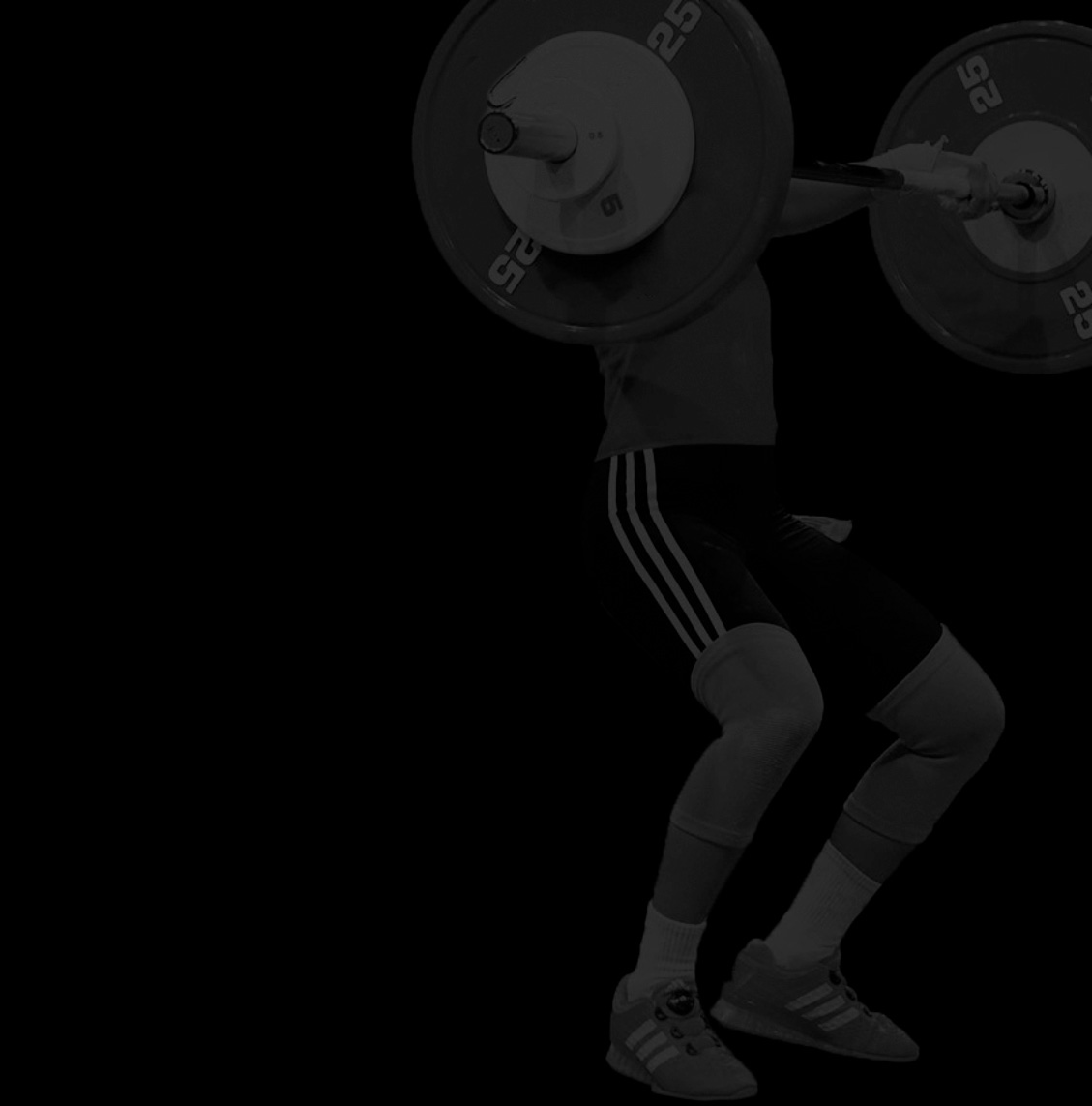
Olympic weightlifting comprises presently two basic lifts, which are performed successively: the athlete first executes up to three Snatch attempts, followed by a maximum of three Clean & Jerk lifts. The Snatch movement has been always linked with weightlifting, being historically known as the “two-hand lift”, or also the “one-motion lift”. In reality, and despite the variety of techniques used throughout the sports’ evolution, the “two-hand” and “one-motion” characteristics always remained at the core of this movement. The main difference over time relates to the way the bar is initially kept overhead – if until the first half of the 20th century, lifters opted for splitting the legs, it soon appeared that a squat position (photo) was preferable, allowing for more stability and more kilos on the bar (as it remains in a lower position when compared with a splitting-leg position). However, both techniques are still permitted today, as described in the 2025 IWF Technical Competition Rules and Regulations: “The barbell is gripped, palms downward and pulled in a single movement from the platform to the full extent of both arms above the head, while either splitting or bending the legs. During this continuous movement upward the barbell should remain close to the body and may slide along the thighs. No part of the body other than the feet may touch the platform during the execution of the Snatch. The athlete may recover in his / her own time, either from a split or a squat position. The lifted weight must be maintained in the final motionless position, with both arms and legs fully extended and feet on the same line and parallel to the plane of the trunk and the