
News and Media

News

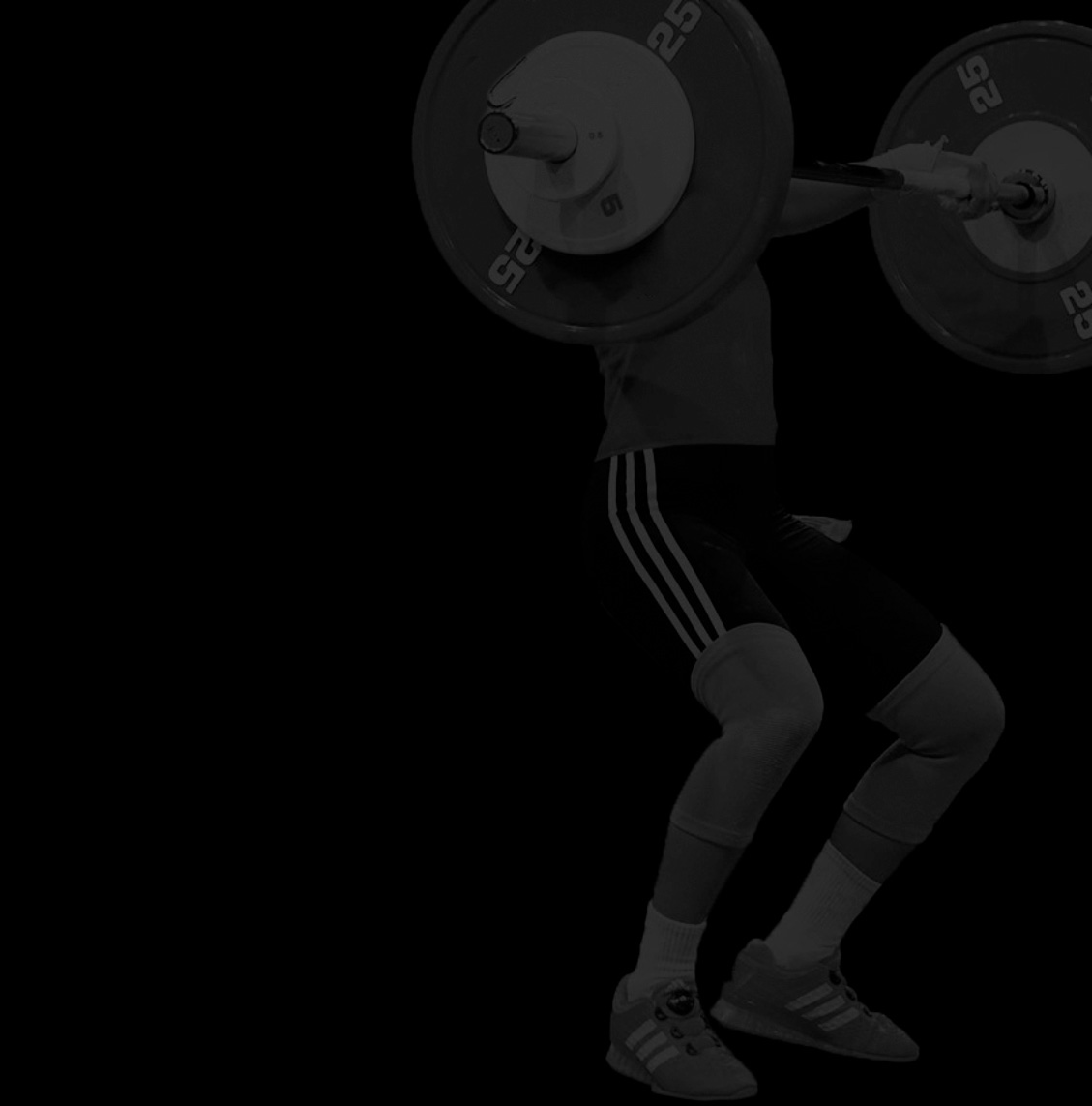
IWF120y/56 – 2016: The first, third Olympic medal for Lydia Valentin

No, there isn’t any mistake in the way the title of this story is written. In 2016, at the Rio Olympic Games, Spain enjoyed its first-ever medal in weightlifting, a feat brilliantly achieved by Lydia Valentin, in the women’s 75kg. With a result of 116-141-257, the Iberian star earned the bronze medal. It was an encouraging improvement after a fifth and fourth place in Beijing 2008 and London 2012, respectively. However, what was initially celebrated as a first podium presence for Spain in the Sport soon became obsolete, with several disqualifications (due to positive doping re-analysis of samples) leading to two more medals for Valentin: in 2018 and 2019, she received retrospectively a silver for her 2008 performance (115-135-250) and then a gold for her 2012 outcome of 120-145-265. Born in February 1985, Valentin may have missed the medal momentum on two occasions but remains the sole Olympic medallist (all genders) for Spanish weightlifting and became one of the most popular athletes in the country. Besides her three Olympic successes, she was a two-time world and four-time European champion. Valentin still qualified for her fourth Olympics, in Tokyo 2020ne, but finished in 10th. “When I received the gold medal from London 2012, almost seven years later, I felt a kind of tranquility and peace. I knew from the beginning that I was the ‘real’ Olympic champion in that event!” commented the Spanish ace, reflecting on the highest moment in her career. Lydia Valentin announced her retirement in September

Olympian Peter Nagy at the helm of the Hungarian Federation

The IWF congratulates Mr Peter Nagy for his recent election as new President of the Hungarian Weightlifting Federation. A former international athlete, Mr Nagy took part in three Olympic Games (London 2012, Rio 2016 and Tokyo 2020ne), getting his best result in the Japanese capital (seventh place). Competing in the heavyweight category, he also took part in 11 editions of the IWF World Championships between 2006 and 2021, ranking sixth in 2013. At continental level, he lifted at 14 European Championships, earning a bronze medal at the 2018 showcase. In Hungary, he was a 20-time national champion. Peter Nagy (right) with IWF Vice-President Attila Adamfi The IWF wishes the best of success to Mr Nagy for his important future endeavours as President of the Hungarian Weightlifting

IWF120y/55 – 1980: Oceania Federation is born in Melbourne

On November 6, 1980, the vibrant Australian city of Melbourne hosted the inaugural meeting of the Oceania Weightlifting Federation (OWF), the fifth and last (in time) IWF continental body. To lead the newly-formed organisation, Les Martyn, from Australia, was elected President, while Bruce Cameron was the first General Secretary of the OWF. Since its foundation, and with the exception of 1983, 1991, 1995, and 2020 annual continental championships have been organised, gathering the 22 national member federations in the continent. From 1993 onwards, the staging of the Oceania Weightlifting Championships incorporates the South Pacific Championships. The junior versions of these events were first staged in 1997, while Youth lifters have had their own event since 2010. In 1993, Melbourne was again in the headlines, as the first Oceanian city to welcome the best lifters on the planet at the IWF World Championships. In 2019, Suva (FIJ) became the first location in the continent organising the IWF World Junior showcase.  Australia remains the most successful country in the region at major events, with four Olympic medals so far, and 11 podium presences (in Total) at the IWF World

IWF celebrates the International Day of Sport for Development and Peace

Today marks the International Day of Sport for Development and Peace (IDSDP), a global celebration recognising the power of sport in advancing social inclusion, equality and peace. This year, under the theme “Levelling the Playing Field: Sport for Social Inclusion”, the International Olympic Committee (IOC) highlights how sport contributes to achieving the United Nations Sustainable Development Goals (SDGs), reinforcing its role in creating more inclusive and equitable societies. As a proud member of the Olympic Movement, the IWF is committed to harnessing the power of weightlifting to drive social change and empower communities. Weightlifting is more than just an elite competition - it is a sport that brings people together at all levels. IWF President Mohammed Jalood emphasised the sport’s role in ensuring inclusivity and social development: “Sport has the power to change lives and weightlifting is no exception. Both on and off the competition platform, we strengthen individuals and communities; providing opportunities for empowerment, enjoyment and personal growth. By working with our National Federations and global ecosystem, we are committed to making the sport accessible worldwide so more people can experience its transformative impact.”  Athletes play a crucial role in promoting these values. Two-time Olympic weightlifting medallist Emily Campbell has been vocal about using her platform to create opportunities for young people: "I want to be more than just an athlete," she recently told the BBC. Emily Campbell (GBR) "I would love to open my own gym for, predominately, youth and development. But I want anyone to be able to walk into my gym, to be able to have that community space to learn weightlifting, to learn physical literacy and to be comfortable and to live a healthy lifestyle." Stories like Campbell’s highlight how weightlifting is changing lives, giving people the confidence and skills to build better futures and be part of a united community. On this IDSDP, and on the road to the Olympic Games LA2028, the IWF remains committed to making weightlifting a vehicle for social inclusion, empowerment and peace - ensuring that everyone, regardless of their background, has a place in the sports’ global

IWF120y/54 – 2000: Female lifters set Olympic milestones for Thailand

Weightlifting and Boxing are quite popular sports in Thailand and appear at the top of the medal chart concerning medals won at the Olympic Games. Lifters have a slight advantage, with 17 podium presences, including five gold, four silver, and eight bronze medals. In our Sport, this successful road started in 2000, when women could participate for the first time in the Games. In the 58kg category, Khassaraporn Suta became the first-ever female Olympic medallist (all sports) for her country, earning the bronze (97.5-117.5-210). Four years later, her compatriot Udomporn Polsak (photo – at the 2003 IWF Worlds) ‘upgraded’ this achievement, with the first-ever Thai gold medal for a female athlete in the 53kg category (97.5-125-222.5). This trend continued until 2016, when in Rio (BRA), Sinphet Kruaithong was the first man to climb on an Olympic podium – winning a bronze (132-157-289) in the 56kg. Out of the 17 medals, 14 were obtained by women and only three by Thai male lifters. The last edition of the Games, Paris 2024, was particularly successful for the Asian nation, with three podium presences (silver in the men’s 61kg and 73kg, and bronze in the women’s 49kg). At the IWF World Championships, Thailand consolidated its status as a powerhouse in our Sport: 51 (only Total results) and 140 (Snatch, Clean & Jerk, Total)

IWF120y/53 – 1936: Last glory days for France at the Olympics

During its first decades of life, our International Federation had a strong institutional influence from France and it was without surprise that Jules Rosset presided over the world governing body from 1920 to 1937, and then again from 1946 to 1952. In parallel, French lifters were also shining on the platform, amassing nine Olympic gold medals, precisely between 1920 and 1936 – these are the country’s only Olympic triumphs in the Sport until today. The most successful lifter of this impressive generation was Louis Hostin, Olympic champion in 1932 and 1936, and runner-up in 1928, competing in the 82.5kg. He was also a two-time world medallist (silver in 1937 and bronze in 1938). Finally, he established 10 World Records throughout his career. He is the only lifter in French Olympic history with two gold medals. The remaining champions at the Games were Ernest Cadine (photo – appearing with his teammates of the French team in the 1920s) and Henri Gance (in 1920), Charles Rigoulot and Edmond Decottignies (in 1924), Roger François (1928), René Duverger and Ryamond Suvigny (1932). Besides these ‘golden’ performances, France would get another three silver (1928, 1976, and 2012) and three bronze (1920, 1928, and 1956) throughout its Olympic participation in weightlifting. The last success was a second place in London 2012, with Vencelas Dabaya, initially fifth, but climbing to the podium after subsequent disqualifications due to doping problems. In 2024, when the Games were back in Paris, the French athletes could not replicate the successes of their predecessors 100 years earlier: despite the presence of four athletes, the best lifter was Marie Fegue, fifth in the women’s 71kg.