News and Media

News

Exercises that Prepare You for the Olympic Lifts

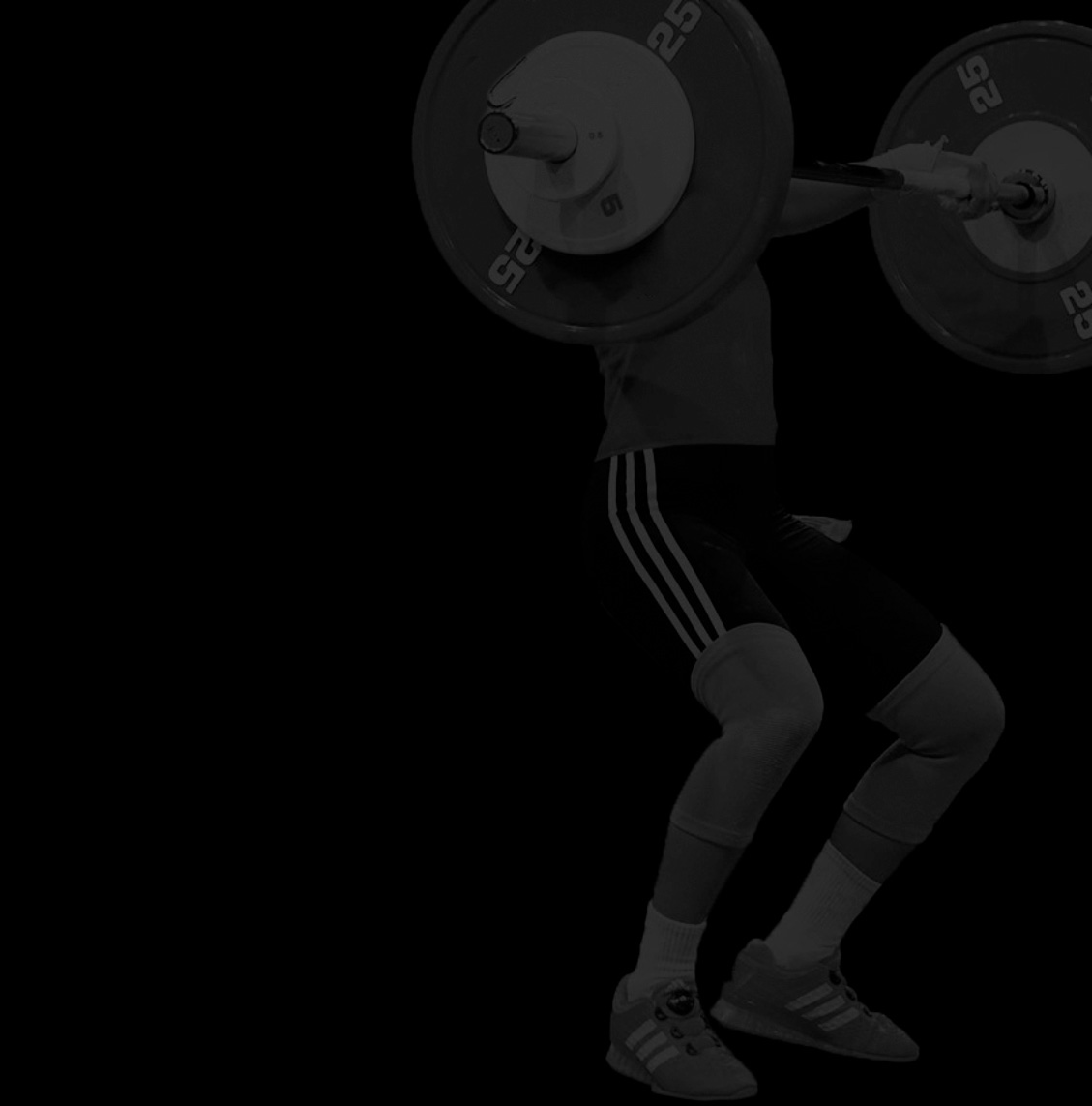
Perfecting technique for the Olympic lifts - the Clean and Jerk and the Snatch - is the end goal of Olympic weightlifting. However, instead of constantly repeating the same two lifts in the gym, the world’s top athletes adopt specific training exercises to improve certain muscle groups that help them achieve these ultimate goals. At the heart of these preparations are exercises designed to strengthen the core and give the lifter the explosive power required to raise and hold heavy weights above their heads. [caption id="attachment_21482" align="aligncenter" width="475"] Front squat[/caption] THE CORE The core is crucial for two main reasons – it protects the spine when it is put under pressure, thereby mitigating the risk of injury. It also helps to efficiently transfer force from the legs to the upper body – important for the dynamic movement of Olympic lifts. To strengthen the core, anti-extension, anti-rotation and anti-lateral flexion work is essential. Anti-extension exercises involve resisting extension at the spine. An example of such an exercise is the ‘plank’, of which there are various degrees of difficulty. Anti-rotation exercises involve the rotation of your torso in a controlled manner, like with a ‘Pallof press’, in which you are resisting the cable’s attempt to rotate your body and building stability. Anti-lateral flexion exercises force you to brace your middle section to maintain an upright structure when you have a weight on one side of your body, encouraging you to bend to one side. ‘Deadbugs’ are an example of this sort of exercise. [caption id="attachment_21473" align="aligncenter" width="476"] The plank[/caption] BODYWEIGHT EXERCISES There are numerous bodyweight exercises that can provide a lifter with the core strength needed to perform Olympic lifts. Dips, for example, not only strengthen the triceps, but also help lifters to practice lockout and pressing movements. Pull-ups – and their many variations – strengthen the lats (widest back muscles). Bodyweight squats encourage mobility of the ankle, knee and hip – and the lifter can then progress to the rack, gradually increasing the weight used to squat with. Inverted rowing, meanwhile, helps to improve grip strength, as well as lower back and hip stability. Lots of professional lifters and coaches use plyometric exercises, like the box jump, for developing the explosive power required in weightlifting. [caption id="attachment_21479" align="aligncenter" width="475"] The overhead squat position[/caption] FOUNDATION EXERCISES Aside from the bodyweight exercises, there are also foundation – or progression – exercises with a barbell that can set up an athlete for the full snatch or clean and jerk, ensuring the body is suitable prepared for these complex lifts. For the clean and jerk, the ‘deadlift’ – or ‘clean pull’, which is an extension of the deadlift to pull the bar as high as possible – is a widely-used technique, while the ‘front squat’ builds on the benefits of a traditional squat by, among other things, perfecting the position of the elbows. The ‘push lift’ and ‘push jerk’ also isolate other parts of the lift and allows the lifter to separately perfect the techniques used in each phase. For the snatch, the ‘overhead squat’ is a one of the most testing progression exercises. This can be complemented with the ‘snatch balance’ – doing so will go a long way to perfecting your lifting posture. [caption id="attachment_21480" align="aligncenter" width="476"] Traditional back squat[/caption] VARIETY No athlete can simply pick up a barbell and perform a perfect snatch or clean and jerk. Every lifter will have certain strengths and relative weaknesses in their physique that will need attention in order to perform the most impressive lifts in weightlifting. To keep training interesting, many athletes will mix up their training routines and line up a variety of exercises. Exploring your gym and the training methods available to you will ensure you keep on improving. There are positive things to be taken from most exercises. Remember, if you’re new to the weight room, start slow and light. Don’t sacrifice technique for weight, a good lifter is first and foremost an injury-free lifter! -- Follow IWF: Facebook Instagram Twitter
Hidilyn Diaz received “The Outstanding Young Men” award

The Senate of the Philippines on Wednesday adopted a resolution lauding eight recipients of The Outstanding Young Men (TOYM) award for 2017 for their invaluable contribution and excellence in diverse fields here and abroad. Senator Sonny Angara, a Philippine Jaycees member and former recipient of the prestigious TOYM award, sponsored during the plenary session Senate Resolution No. 677 to commend the men and women recipients of the annual award. "This year's TOYM calls for 'unity towards nation building' - and the men and women that we recognize today proves that there is no single process or method to build a nation. It is done through collective contributions from people with different backgrounds, faiths and advocacies," Angara. "It is our hope that, by recognizing these men and women, we would be able to empower other Filipinos to do their part - in whatever field it may be - to make our country better. This has always been the goal of the TOYM since its inception in the late 50s," he added. The TOYM 2017 features a diverse set of honorees from around the country who have excelled in the fields of law enforcement, education, public service, sports, arts, community service, medicine, and journalism. Over the years, it has been a tradition for the Senate to be another venue to give the honorees the recognition that they deserve, not only for their personal achievements, but mostly because their talents have brought service to others. Hidilyn F. Diaz, the 2016 Summer Olympic weightlifting medalist, built a weightlifting training facility in her hometown in Zamboanga City where aspiring athletes can harness their skills.

Registration open to 2018 FISU University Worlds

In 2018, 20-23 September, one of Poland's famous University cities, Biala Podlaska will host the 6th FISU World University Weightlifting Championships in a very pleasant and friendly environment. All countries are encouraged to send their teams to the event. Here is the link to the 2018 WUC: http://wucw2018.awf-bp.edu.pl/en/ IWF Member Federations may register their entries through the respective National University Sport Federations: https://accreditation.fisu.net/Pages/Home.aspx

Nicu Vlad: Romania is proud to host the European Championships in the Centennial year

Bucharest, March 6 /Agerpres / - President of the Romanian Weightlifting Federation (FRH) and Vice President of the International Weightlifting Federation (IWF) Nicu Vlad told AGERPRES on Tuesday that he is proud that his Federation will host the European Senior Championships in the year Romania celebrates its Greater Union Centennial. 'Romania hosted twice the European Championships in 1972 and 2009, and now we have this opportunity again. We did not expect to succeed, but because Albania could not host it, we offered to host it ourselves. I wanted so much to bring this competition to Romania, and I managed even if there were other countries like Sweden and Georgia. Yesterday we officially received the papers from the European Weightlifting Federation and we got to work. It's late; there is a ton to do, but we are very proud to organise the European Championships in the year of the Centennial,' said Vlad. He added that Romania will have an important international coverage because of this competition. 'The European Championships will be broadcasted on several continents; Eurosport alone will have 36 live hours, plus replays. Thus, Romania will benefit from a great international coverage in the year that marks the centennial of its Greater Union,' he said. Source:

IWF reinforces commitment to developing women’s weightlifting on International Women’s Day

The IWF today reiterated its commitment to developing women’s weightlifting around the world and ensuring equal opportunities for men and women to take part in the sport. Women’s weightlifting has grown significantly in recent years with more women than ever taking part in last year’s World Weightlifting Championships. This growth has reflected the ongoing efforts of the IWF to support National Federations in developing women’s weightlifting in their respective countries. This week, IWF Vice President and  USA Weightlifting (USAW) Chair Ursula Garza Papandrea has been in Ahvaz, Iran to lead a training camp for female Iranian weightlifters and support in the development of women’s weightlifting. Weightlifting has traditionally been a men-only event in Iran, but Garza Papandrea’s visit, accompanied by American technical official Sally Van De Water and national champion Derrick Johnson, reflects a significant step for the country. Garza Papandrea has met with Islamic Republic of Iran Weightlifting Federation President Ali Moradi who has spoken of his plans for Iranian women to compete at the Tokyo 2020 Olympic Games. Speaking on International Women’s Day, IWF President Tamas Ajan said: “Gender equality is a key priority for the IWF. We want to ensure that there are equal opportunities for men and women to practise our sport from amateur level all the way up to elite. Good progress has been made but there is more work to be done and the IWF is committed to working with our National Federations to achieve gender equality.” At Tokyo 2020, weightlifting will be gender equal with the IWF with seven men’s and seven women’s weight

Get to know the Tokyo 2020 Mascots

AFTER 2,042 ENTRIES, AND A VOTE INVOLVING PUPILS FROM 16,769 SCHOOLS, THE MASCOTS FOR THE OLYMPIC AND PARALYMPIC GAMES TOKYO 2020 HAVE BEEN REVEALED. The winning designs were officially unveiled on 28 February 2018 by the Tokyo Organising Committee of the Olympic and Paralympic Games (Tokyo 2020), after elementary school pupils across Japan and at Japanese schools overseas chose their favourites from a shortlist of three sets of designs. The winning designs came from 43-year-old Ryo Taniguchi, a graphic designer from Fukuoka, in southern Japan. His characters – dark blue for the Olympic Games and cherry blossom pink for the Paralympic Games – strove to combine traditional values with a futuristic looks, encapsulating the “innovation from harmony” concept which is at the heart of the branding vision for Tokyo 2020. “THE CHILDREN SELECTED TWO MASCOTS THAT EMBODY BOTH ANCIENT TRADITION AND NEW INNOVATION.” Ryohei Miyata, CHAIR OF THE MASCOT SELECTION PANEL The Mascot Selection Panel will choose names for the winning mascots in the near future, before they make their official debut in July or August 2018. 205,755 classes at 16,769 schools took part in the vote, with the winning Design Set A receiving 109,041 votes. Design Set B attracted 61,423 votes and Design Set C received 35,291. INNOVATION FROM HARMONY “The Tokyo 2020 Olympic and Paralympic Games finally have their mascots,” said Ryohei Miyata, chair of the Mascot Selection Panel. “I cannot wait to see these two characters coming to life in the stadiums, on the streets and on TV. The children selected two mascots that embody both ancient tradition and new innovation. “I believe this is an excellent choice since Tokyo 2020's branding vision is ‘Innovation from harmony’, which implies that innovation will occur when the old and the new of Tokyo and Japan come together.” The results were announced in front of around 600 children at one of the participating schools, Hoyonomori Gakuen School in Tokyo, and was live-streamed to allow children all over the country to share the moment and discover the winner in real time. GET SET FOR THE GAMES The mascot voting process was part of Tokyo 2020’s nationwide educational programme called “Yoi Don!" (“Get Set”), which sets out to bring the Olympic and Paralympic Games into schools across Japan and allows students to participate in educational initiatives linked to the Games. By encouraging discussion of the mascots in classes, the voting process helped children learn about the values of the Olympic and Paralympic Movements. The winning mascots will also feature prominently on a new educational website (https://education.tokyo2020.org/) launched by Tokyo 2020 on 28 February, which is targeted specifically at children, students and teaching staff at schools across Japan. Initially in Japanese only (an English language version is due to be launched in March 2018), the site will feature interactive activities for children, including free online English lessons and news about the Tokyo 2020 Games, as well as Olympic and Paralympic educational materials for teachers. The overall aim will be to get schoolchildren involved with the Games, learning more about the Olympic and Paralympic Movements, and participating more in sport. Source: