
News and Media

News

IWF120y/74 – 1972: Olympic title crowns a superb career for Imre Foldi (HUN)

Born in May 1938, Imre Foldi had a challenging childhood and teenage years, but became the greatest-ever Hungarian weightlifter and arguably one of the best in our sports’ history. Having lost his mother during World War II, he works as a miner and his extraordinary strength is quickly noticed. He then starts practicing weightlifting and thanks to his coach's intervention, he is not allowed to work underground in order to prevent any possible accident. In 1957, he wins his first national title, and two years later he makes his appearance at the highest level, at the World Championships, where he clinches a bronze medal in the 56kg category. It’s the beginning of an outstanding career, until his retirement in 1977 and his participation in five Olympic Games. He is the first lifter in history to achieve this feat. It all starts in 1960 (Rome), where he is sixth. In Tokyo 1964, he gets the silver, a performance that he replicates in Mexico 1968 (only losing the gold because of his body weight, 300 grams heavier than the winner, with the same Total of 367.5kg). At the 1972 Munich Games, he ultimately earns his only Olympic gold, in 127.5-107.5-142.5-377.5. Finally, in Montreal 1976, he concludes his Olympic career, also with a sixth position. Out of his nine presences at World Championships (besides the Games, counting as such at the time), he gets another six additional medals, including one gold (in 1965), three silver, and two bronze. A specialist in the (extinct) Press movement, he set 15 World Records in this lift (with a best of 137.5kg) and six additional global marks in Total (with three movements). After his retirement, he was a successful coach, namely for his daughter Csilla, a European champion. Foldi passed away in April 2017, aged

IWF120y/73 – 2000: Tara Nott (USA), the first female lifter with Olympic gold

On September 17, 2000 the weightlifting family was in a celebratory mode at the Sydney Olympics. On that day, after more than 100 years only with male participation, the Games presented the first-ever female competition, the women’s 48kg category. It was the beginning of a successful road that presently encompasses perfect gender equality between men and women in the greatest sports event on the planet (in Paris 2024, weightlifting was represented by 60 male and 60 female lifters). After fierce competition at that inaugural event, Tara Nott, from the United States, finishes second (82.5-102.5-185) behind Izabela Dragneva, from Bulgaria. Three days later, the European lifter tests positive for a prohibited substance and loses her gold medal. Even if other women’s weightlifting events had taken place in the meantime, Nott becomes ‘de facto’ and in the history books the first-ever female Olympic champion in weightlifting. Born in 1972, Nott (later married to US wrestler Casey Cunningham) is a sport addict, who excels in many of them. She is the only athlete to have trained at the highest level in three different sports (gymnastics, soccer, and weightlifting) at the US Olympic Training Center! After winning the gold at the 1999 Pan-American Games (she is ninth in the same year at the IWF Worlds – photo), Nott gives the US an Olympic gold medal in a sport where their last champion had been Chuck Vinci, in 1960. She remains one of the two US female lifters with an Olympic gold – Olivia Reeves accomplished the same feat 24 years later, at last year’s Paris Games. Nott revalidates her Pan-American title in 2003, but at the 2004 Athens Olympics, she finishes 10th.

Khaled Mehalhel re-elected president of the Weightlifting Federation of Africa

The Weightlifting Federation of Africa (WFA) held its electoral congress on April 22, 2025 in Mauritius and unanimously re-elected Mr Khaled Mehalhel for a new term until 2029. In a significant display of unity, the delegates from the African continent considered that Mr Mehalhel’s “leadership has proven vital in the development of the sport across Africa, and his re-election marks a clear mandate to continue building on the federation’s achievements and drive for greater success on the international level”. The newly elected WFA Executive Board, with President Khaled Mehalhel seated in the centre of the front row (and IWF President Mohammed Jalood following this special moment online) The composition of the WFA Executive Board and Committees for the term 2025 – 2029 is as follows:President: Mr. Khaled Mehalhel (LBA) General Secretary: Mr. Manareddin Eshelli (LBA) 1st Vice-President: Dr. Kevin du Plooy (RSA) Vice-Presidents: Mr. Alex Randriamanarivo (MAD) Mr. Chimdi Ejiogu (NGR) Mr. Mohamed Abdelmaksoud (EGY) Mr. Poorun Bhollah (MRI) Executive Board Members: Mr. Kamel Saidi (ALG) Mr. Salim Ssenkungu (UGA) Mr. Pius Ochieng (KEN) Mr. Boukar Tikire (CMR) Mr. Ahmed Tahori (MAR) Mr. Robert Rose (SEY) Mr. Ben Nunoo Mensa (GHA) Deputy General Secretary: Mr. Bhollah Ravi (MRI) Technical Committee Mr. Horst Sayler (SWZ) Mr. Mohamed Farih (MAR) Mr. John Ogolla (KEN) Mr. Lawrence Iquaibom (NGR) Coaching & Research Mr. Alex Rankgwe (BOT) Mr. Abdelghani Fares (ALG) Mr. Alaaedin Hassan (EGY) Ms. Samira Ouass (MAR) Medical Committee Dr. Magdy Abdelrahman (EGY) Dr. Ahmat Adoum (CMR) Dr. Ait Abdelghani

European Championships: More records for Nasar, Koanda is top female and Iceland has its first winner

Olympic champions Karlos Nasar and Solfrid Koanda were the top individual performers at the 2025 European Championships in Chishinau, Moldova which finished this week. Seven other Paris Olympians were among the winners. The men were Nasar’s Bulgaria team-mate Ivan Dimov at 61kg, the Individual Neutral Athlete Yauheni Tsikhantsou from Belarus at 102kg and two Armenians - Garik Karapetyan at 109kg and Varazdat Lalayan in the super-heavyweights. The women were Mihaela Cambei from Romania at 49kg and super-heavyweight Emily Campbell from Great Britain. Nasar, who will be 21 next month, moved up in weight to the 96kg category and broke the snatch world record within six minutes of his first lift. The Bulgarian also claimed the record on total, which had been set by Sohrab Moradi from Iran in 2018. He won by 38kg on 188-229-417, despite weighing in more than 2.5kg under the limit. Karlos Nsar (BUL) - Photo credit: ewf.sport Nasar was a clear winner in the Robi points rankings. Three of the top six came from a high-quality 102kg session – Tsikhantsou, Marcos Ruiz from Spain, who continues his improvement after a serious injury ruined his Olympic qualifying hopes, and Tudor Bratu from Moldova. Yusuf Fehmi Genc, whose 348kg at 73kg put him fourth in the rankings, was one of three winners for Turkiye alongside Kaan Kahriman and Cansu Bektas. Bulgaria also had three – Nasar, Dimov and Angel Rusev – while Armenia (Lalayan and Karapetyan), Romania (Cambei and Andreea Cotruta), Italy (Oscar Reyes and Genna Toko Kegne) and Great Britain (Campbell and Sarah Davies) had two each. Romania also had its heaviest medallist on total since 1984 when Luis Rodriguez finished third at 109kg. There was a first ever European Championships victory for Iceland when Eyglo Sturludottir got the better of Zarina Gusalova, an Individual Neutral Athlete from Russia, at 71kg. It was a phenomenal effort by Eyglo, who is studying to become a doctor: Iceland’s population is 390,000 compared with Russia’s 143 million. Eyglo’s 244kg total was higher than all the athletes in the 76kg and 81kg sessions, and the top three at 71kg – Eyglo, Gusalova and the Individual Neutral Athlete from Belarus Siuzanna Valodzka - were second, third and fifth in the individual rankings. The top five finishers at 55kg were all ranked in the top 10 on Robi points. Garance Rigaud from France was the winner. Moldova, which did a very good job of hosting the Championships for the first time, had its first female continental champion when Elena Erighina ended a run of narrow defeats at 81kg. Women's 87kg medallists: winner Solfrid Koanda (NOR, back row, in the centre) - Photo credit: ewf.sport Koanda, who declined her last two attempts after making 267kg, was winning her fourth straight continental title for Norway, while for Britain’s Campbell it was five in a row. Koanda has been training in Germany under the guidance of Almir Velagic. He is a key figure with Sport Director Michael Vater in building a “new generation” German team, as well as working with Koanda. Vater said, “Having Solfrid training with us is good for her and good for our team. The younger lifters look up to her, and she benefits from being in a group rather than training on her own. It makes for a good atmosphere.” Germany’s new team started well in Chisinau, where Raphael Friedrich won at 89kg. Roberto Gutu and Kiara Klug also excelled as Germany won three golds, three silvers and four bronzes. By Brian

IWF120y/72 – 2025: Knowing one of the basic lifts – Clean & Jerk

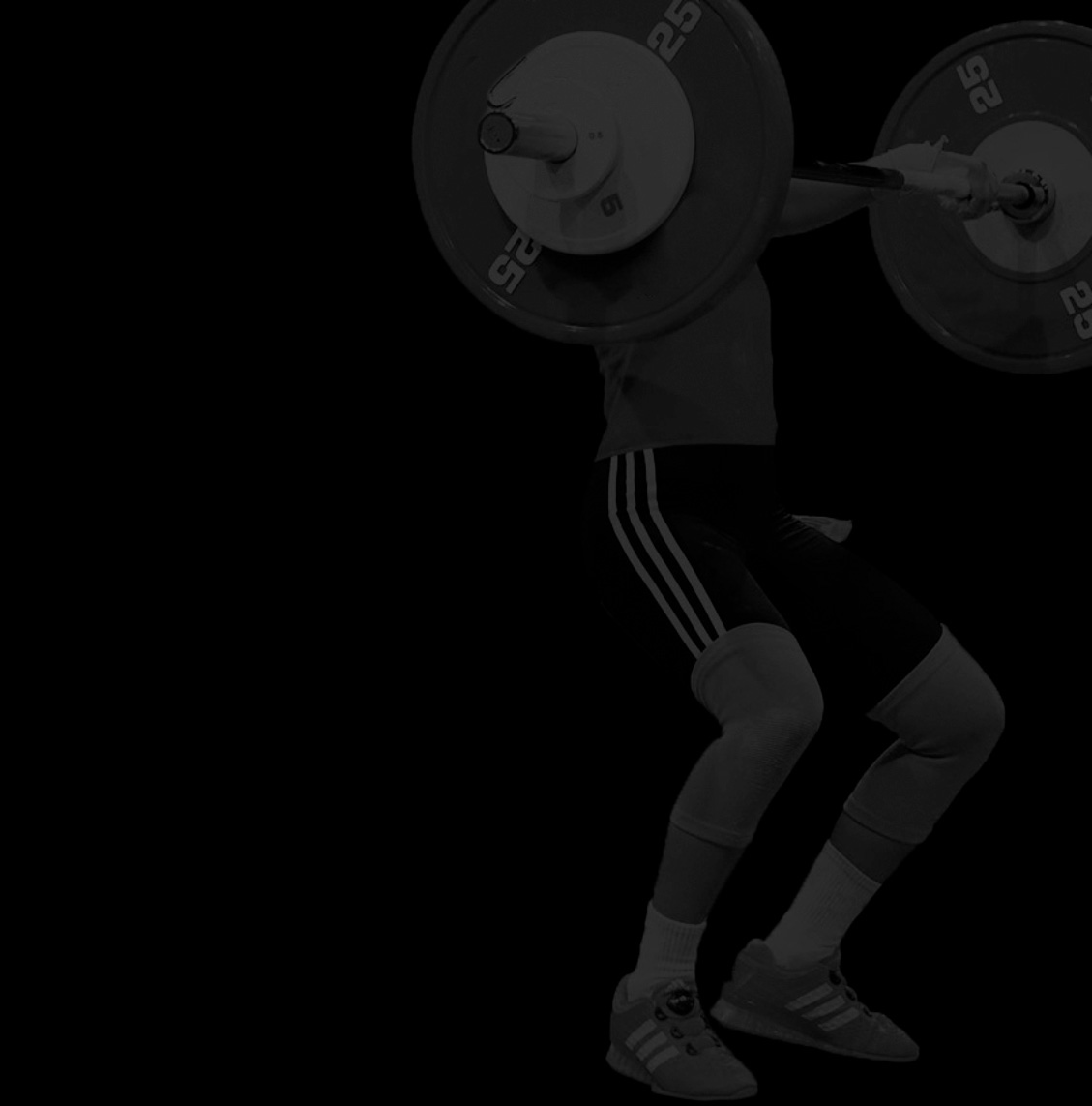
Together with the Snatch, the Clean & Jerk is one of the two basic lifts in Olympic weightlifting. Considered in the early days a rudimentary test of strength, it became a highly technical movement from the moment coaches and athletes began to understand the importance of biomechanics and training methods, leading to significant improvements in performance. Requiring precision, strength, and coordination, it implies explosive power, flexibility, and technique. Unlike the Snatch, the main characteristic of the Clean & Jerk is that the lift is executed in two consecutive movements (thus also allowing for heavier weights): the 'clean' phase, where the barbell is lifted to the shoulders (photo), and the 'jerk' part where it is propelled overhead. According to the 2025 IWF Technical Competition Rules and Regulations, the correct ‘clean’ must be as follows: “The barbell is gripped, palm downward and pulled in a single movement from the platform to the shoulders, while either splitting or bending the legs. During this continuous movement upward the barbell should remain close to the body and the barbell may slide along the thighs. The barbell must not touch the chest before it stops at the final position either on the clavicles, chest, or on fully bent arms. The athlete’s feet must return to the same line and the legs must be fully extended before starting the Jerk. Before the Jerk, the athlete may adjust the position of the barbell for the following reasons: a) to withdraw or “unhook” the thumbs b) if breathing is impeded c) if the barbell causes pain d) to change the width of the grip”. As for the ‘Jerk’, the rules stipulate that “the athlete bends and dynamically extends the legs and arms simultaneously to move the barbell upward in one motion to the full extent of the arms, while either splitting or bending the legs. The athlete returns his / her feet to the same line parallel to the plane of the trunk and the barbell with his / her arms and legs fully

IWF120y/71 – 1964: Waldemar Baszanowski, a reference in Polish weightlifting

Before arriving in Tokyo, for his second Olympic participation in 1964, Waldemar Baszanowski was already a distinguished athlete in Poland. After winning the 1961 world title in Vienna (AUT) and getting two additional silver medals in 1962 (Budapest, HUN) and 1963 (Stockholm, SWE), he was chosen as his nation’s flagbearer in the Opening Ceremony of the Games in the Japanese capital. Some days later, he would definitively enter into the weightlifting Pantheon, clinching his first Olympic victory in the 67.5kg category (132.5-135-165-432.5). Known for his impeccable style and for being one of the last lifters to use the “split clean”, the Polish ace revalidated his title four years later in Mexico City, this time lifting a total of 437.5. In 1972, he competed in his fourth Games (he had been fifth in 1960, in Rome), but couldn’t reach the podium in Munich, finishing fourth. At the World Championships, and besides the above-mentioned medals, he got two additional titles (1965 and 1969) and was second in 1966, 1970, and 1971. He is still today the only Polish lifter with two Olympic titles and the most prolific (10 medals) athlete in the history of the IWF World Championships! Throughout his amazing career, he also set 24 World Records. Poland has a solid tradition in weightlifting, with a total of 34 medals at the Games (six gold, six silver, and 22 bronze)! Off the platform, Baszanowski’s life was marked by a tragic car accident (in which he was the driver) in 1969, where his wife tragically died, but their six-year-old son survived. Upon his retirement, he became a successful coach and administrator, being elected in 1999 as President of the European Weightlifting Federation. In 2007, tragedy struck again: after falling from a tree in his garden, Baszanowski was paralysed from the neck down. In April 2011, he passed away in Warsaw, at the age of