News and Media

News

Coaching course in Kenya

Kenya Amateur Weightlifting Association with the assistance of the International Weightlifting Federation organized a Level 1 and Level 2 coaching course in Nairobi, Kenya from 16th to 21st July 2018. The course was presented by Dr. Kyle Pierce, IWF Coaching and Research Committee member. The 16 participants included experienced and new coaches as well. After the theoretical and practical sessions of the course, they took a 50 question multiple choice test in order to become an IWF Certified Club Coach. The Club Coach Course is primarily intended for new coaches. It provides them the opportunity to learn the necessary skills to safely and correctly teach the sport of Weightlifting. The content covers several areas including safety, basic sports science, teaching and coaching principles, a method for teaching beginners’ basic training and competition lifts, training programs for beginners, organizing simple Weightlifting competitions, and anti-doping. Additional presentations were made on the topics of Bioenergetics, Periodization, Recovery Methods (with a focus on Nutrition), Dietary Supplements, Technique of the Competition Lifts, Sports Psychology Issues, and Youth Resistance Training including Long-term Athlete Development. As the new Qualification System for the Games of the XXXII Olympiad in Tokyo in 2020 comes into force on 1st November 20018, it was also presented. Besides the lessons conducted by Dr. Pierce, Anti-Doping Agency of Kenya (ADAK) gave lectures on the Doping Control Process, Anti-Doping Rules Violation, Prohibited Substances, Therapeutic Use Exemptions (TUEs), Nutrition, Supplements, and the Consequences of Doping. All presentations were outstanding and kept the attention of the course participants throughout. Kenya Amateur Weightlifting Association was grateful for the successful conclusion of the course and thanked to the IWF to make this course

Coaching course in Kenya

Kenya Amateur Weightlifting Association with the assistance of the International Weightlifting Federation organized a Level 1 and Level 2 coaching course in Nairobi, Kenya from 16th to 21st July 2018. The course was presented by Dr. Kyle Pierce, IWF Coaching and Research Committee member. The 16 participants included experienced and new coaches as well. After the theoretical and practical sessions of the course, they took a 50 question multiple choice test in order to become an IWF Certified Club Coach. The Club Coach Course is primarily intended for new coaches. It provides them the opportunity to learn the necessary skills to safely and correctly teach the sport of Weightlifting. The content covers several areas including safety, basic sports science, teaching and coaching principles, a method for teaching beginners’ basic training and competition lifts, training programs for beginners, organizing simple Weightlifting competitions, and anti-doping. Additional presentations were made on the topics of Bioenergetics, Periodization, Recovery Methods (with a focus on Nutrition), Dietary Supplements, Technique of the Competition Lifts, Sports Psychology Issues, and Youth Resistance Training including Long-term Athlete Development. As the new Qualification System for the Games of the XXXII Olympiad in Tokyo in 2020 comes into force on 1st November 20018, it was also presented. Besides the lessons conducted by Dr. Pierce, Anti-Doping Agency of Kenya (ADAK) gave lectures on the Doping Control Process, Anti-Doping Rules Violation, Prohibited Substances, Therapeutic Use Exemptions (TUEs), Nutrition, Supplements, and the Consequences of Doping. All presentations were outstanding and kept the attention of the course participants throughout. Kenya Amateur Weightlifting Association was grateful for the successful conclusion of the course and thanked to the IWF to make this course

Youth Indonesia Weightlifting Championships

The Youth Indonesia Weightlifting Championships were held from July 29 to August 6 at the Gor Ngurah Rai venue in Denpasar, Bali. Altogether there were 160 participants from the following countries: Indonesia, Philippines, Singapore and Thailand. The competition was made possible through the funding of the Ministry of Youth and Sport Indonesia and spectators had the opportunity to witness a very good standard competition among the countries present. In the 56 kg the competition was tight between athletes from Indonesia and Thailand. Thailand did well in all the categories they competed winning gold however the Indonesian and Philippines youth competitors displayed great talent as well. Medals were awarded for the snatch, clean& jerk and the total. Many countries have earmarked their willingness to compete at next year's edition. Major Genral Intarat Yodbangtoey, IWF 1st Vice President and Boossaba Yodbangtoey, AWF General Secretary also participated at the event. On the last day, a coach and administrators’ seminar was also organized with special focus on the new bodyweight categories, the Olympic qualification and the very important topic of Anti-doping and athlete’s whereabouts. Source: Aveenash Pandoo, IWF Coaching & Research Committee

2018 Eleiko Email International Club Tournament

The Eleiko Email International Club Tournament which concluded on August 3rd with 703 participants (404 men and 299 women), was a great success for club lifters. Congratulations to the first three Clubs placing in the team points for men and the first three Clubs placing in the team points for women. Each club will receive an Eleiko training set. The first three clubs ranking in the men team event are: The Cougars Club from Australia, the Taborio Club from Kiribati and the Rocks Club from Nauru. The first three clubs ranking in the women team event are: The Cougars Club from Australia, the Rocks Club from Nauru and the Functional Strenght Club from New Zealand. The Oceania Weightlifting Federation wishes to thank all the clubs who took part in this year’s tournament as well as Eleiko and IWF and congratulates the individual winners. Source: Paul Coffa, OWF General Secretary — Follow IWF: Facebook Instagram Twitter
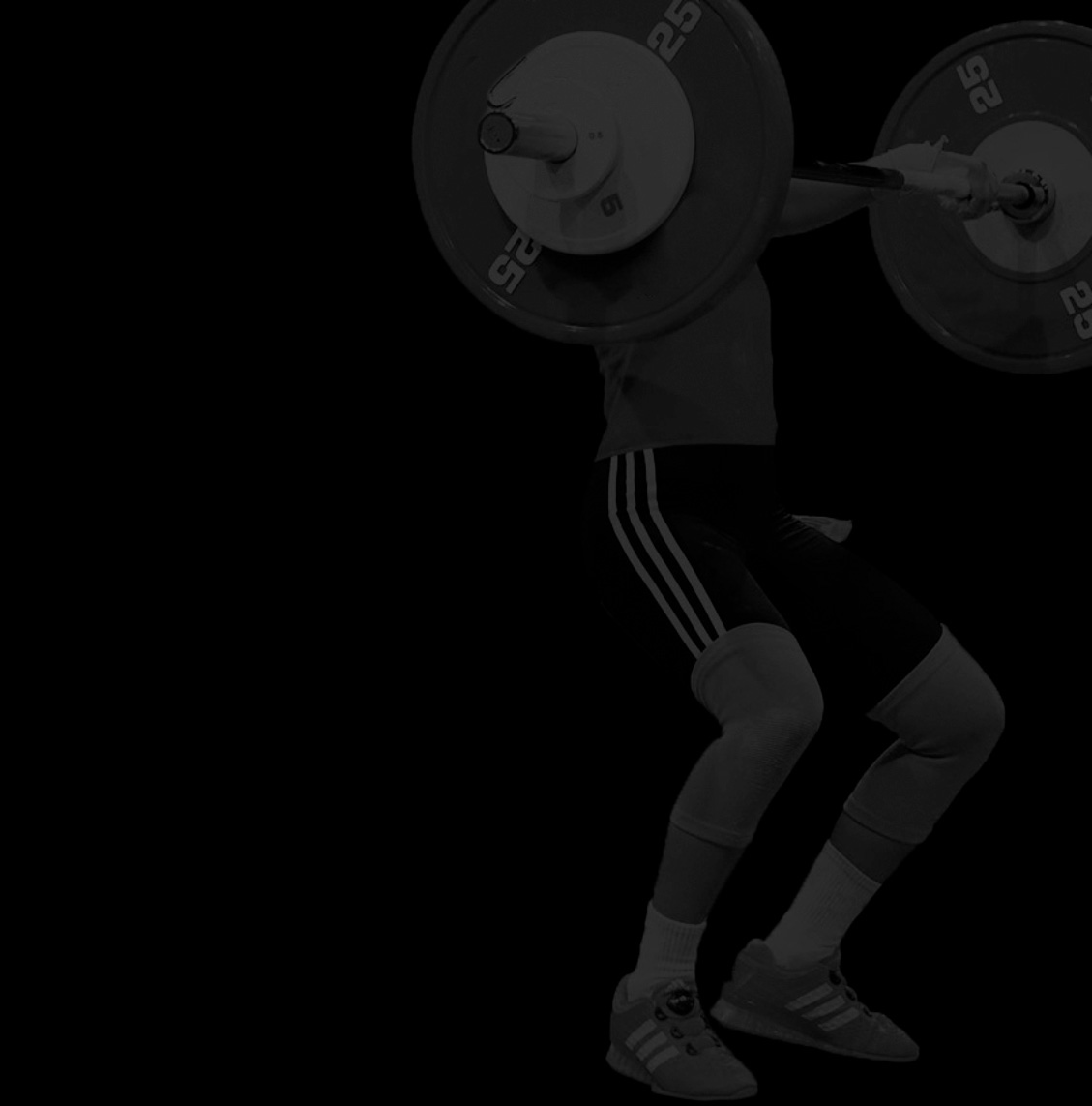
Brandi Darby first blind lifter to place at a USA Weightlifting national competition

Pittsburgh native Brandi Darby made history at USA Weightlifting’s American Open Series 2 in Valley Forge, PA. At 36-years-old, she became the first legally blind lifter in recent history to win any medal at a national level weightlifting competition, earning a silver and two bronze medals in the women’s over 35 category. Darby competed in the 90kg weight class. Her best lifts were a 65kg Snatch and a 70kg Clean and Jerk, bringing her total to 135kg (third place). Despite this accomplishment, Brandi says she’s never aspired to win medals in the sport, but rather be an example to others who may be hesitant to try weightlifting because of a disability. “There are a lot of us who don’t have the confidence to try this or any sport because the challenges seem bigger than the possibilities,” Darby told USA Weightlifting. Like many of today’s weightlifting stars, Darby found the Olympic lifts through CrossFit. “We had a love hate relationship,” she said of the CrossFit classes she took while in college. “One day I came in and saw an 800m run on the board and died a little inside.” With a disdain for running, she signed up for the Olympic lifting classes instead. “It was love at first lift,” Darby said. “They sat down between lifts and the volume increased with every set. It was like the Disney World of fitness.” With a newfound love of weightlifting, Darby says her first challenge was to find a coach that didn’t feel burdened by her disability. “My vision will never change, but I do have control over how I’ll be treated,” she said. Darby eventually began training with Coach Tom Duer at the Pittsburgh Fitness Project Barbell, a USAW member club. “Now that I’m with a coach who isn’t deterred by my vision, I worry more about environmental things. Will I be able to see the judges and their cues? Will the lights on stage be in my eyes and distract me? What stair, cords or apparatuses might I trip over because of my lack of depth perception?” Despite her apprehension, Darby began competing at local weightlifting competitions in February of 2018, eventually qualifying for her first national competition, the American Open Series 2, where she became the first blind weightlifter to medal at a USA Weightlifting sanctioned event. “I want to thank USAW for cultivating a culture of inclusion for people with disabilities like mine,” she said. I’ve tried a lot of sports in my life, this is the only one I didn’t quit for lack of support.” Source: teamusa.org — Follow IWF: Facebook Instagram Twitter

Meet Judy Glenney – The Woman Behind Women’s Weightlifting

“I had always been interested in testing my strength, but growing up that’s just something girls didn’t do,” remembers Judy Glenney, four-time Women’s National Champion. The American was one of the first women to pick up a barbell and swing it above her head, a movement that would see her start a long, rewarding relationship with weightlifting. [caption id="attachment_23537" align="alignright" width="290"] Gary and Judy Glenney[/caption] Judy was introduced to weightlifting by Gary Glenney, a member of the Athletes in Action weightlifting team and her future husband. “I was actually responsible for cleaning their weight room” laughs Judy, “I knew nothing about weight training, but I wanted to learn.” Under Gary’s guidance, Judy began to learn basic compound movements like the bench press and squat. But it still wasn’t enough to satisfy Judy’s burning curiosity. “I was interested in attempting what the guys around me were doing,” she says, “the snatch and the clean and jerk. The thing that intrigued me about the Olympic lifts was that they combined so many different things – strength, power, flexibility. Moving the body into those positions absolutely amazed me.” As soon as Judy started to practice the two lifts, she fell in love with them. And like any other great strength athlete, she became obsessed with trying to move as much weight as possible over her head, an obsession that would eventually lead to testing herself in male-dominated competition. ALL-MALE COMPETITION “Let’s be clear, I lifted weights because I loved to lift weights,” Judy says unapologetically. “I wasn’t trying to breakthrough the glass ceiling or embark on a crusade for women everywhere, I just wanted to test myself.” [caption id="attachment_23532" align="alignleft" width="291"] Judy in competition[/caption] It was in competition where Judy would start to encounter more pushback. Initially, she would compete against men in their competitions, as this was all that was on offer. She even agreed to not be officially recognised for her efforts – no medals, no trophies. “I wanted to show I could do it on their terms,” says Judy. “If I could show them I could lift with correct technique, that’s how I would win respect. I let my lifting do the talking.” Judy got the impression early on that this was something girls weren’t supposed to do. Fortunately, she had Gary in her corner giving simple advice - ‘if you enjoy it, do it.’ “I put all the funny looks aside”, says Judy, “I enjoyed the lifts, I enjoyed training, I enjoyed challenging myself. So, I just did it.” It was in the early 70s that Judy began to compete in weightlifting, when the American feminist movement was in full flow. “I wanted to compete to test myself,” explains Judy, “but in the process I found myself breaking down the barriers that existed to women and becoming part of the wider narrative.” Soon Judy would find herself at the forefront of the women’s weightlifting movement. WOMEN TAKE THE SPOTLIGHT Judy’s efforts on and off the platform were starting to make waves in the weightlifting community. Bill Clark, a pioneer in strength sports, held the first female competition in 1976 in Columbia, Missouri. “There were only a handful of us,” Judy recalls. It was the starting point for accelerated growth in women’s weightlifting. [caption id="attachment_23540" align="alignright" width="290"] Judy, Murray Levin and Mabel Rader[/caption] Five years later, the first official National Women’s Championship was held by USA Weightlifting in Waterloo, Iowa. It was Judy, along with magazine owner Mabel Rader and former USA Weightlifting President Murray Levin, who spearheaded the campaign for women to compete. “Murray was instrumental in the movement,” Judy says. “His was the deciding vote that allowed women into the fold.” Judy bested 28 other women to win the first Women’s National Championships, a title she would hold for four consecutive years. Judy recorded her best lifts in this era – 97.5kg clean and jerk, 82.5kg snatch and a 172.5kg total at a bodyweight of 67kg. How would she compete against today’s women? “Oh, I don’t think I could match them!” she laughs. From 1981 onwards, women’s weightlifting experienced unprecedented growth. The historic decision to open the sport to women internationally was made by the IWF in 1983. It was realised three years later with the Pannonia Cup held in Budapest, which attracted competitors from Hungary, China, Canada, Britain and the United States. “Budapest was the catalyst,” Judy remembers. “We drew big audiences. That made the guys at the top sit up and pay attention.” FROM STRENGTH TO STRENGTH As soon as the hunger for women’s weightlifting became apparent, international competition flourished. The success of the first Women’s World Championships in 1987, held in Daytona Beach, Florida, would assure recognition and support for women around the world. Interestingly, a prepared China won seven of the eight weight categories at these Championships, establishing their dominance in the sport that lasts to this day. [caption id="attachment_23542" align="aligncenter" width="500"] Judge Judy. Judy on jury duty for the World Championships[/caption] This fresh impetus for women would lead them to the Olympic Games for the first time in 2000. Her competing days over, Judy would have to settle for a position on the jury at the Sydney Games. “My dream was to see women compete at the Olympics,” Judy smiles. “It was incredibly rewarding and humbling to see it happen.” Weightlifting put women on the Olympic programme before wrestling and boxing, and at Tokyo 2020 there will, for the first time, be an equal split of the medals. Judy had been working towards that goal long before now. As the sport moves from strength to strength, bringing in female weightlifters from all over the world, it’s important to remember that that every one of them owes a debt to Judy Glenney.       - Judy Glenney lives and works in Vancouver, Washington in the United States. In 1989 she wrote a book with her husband Gary titled ‘So you want to be a female weightlifter’ and still works with aspiring female weightlifters. A note from Judy:  'I want to thank all the folks that have contacted me regarding the history of women's weightlifting. It has been such an honor and a humbling experience to find so many are interested. I never in my wildest dreams thought it would bring about this much attention. I am so thankful that God allowed and enabled me to do what I did. He brought about the fulfilment of a dream that I never thought possible in a most unexpected way. If it's one message I would like to convey, it would be to never give up on your dream. You never know how or when it will come true. Thanks again for allowing me to share my passion - my hope is that others will find that passion as well!' — Follow IWF: Facebook Instagram Twitter